

Types and uses of turning tools Turning tools are the most widely used single-edged tools. It is also the basis for learning and analyzing various types of cutting tools. Turning tools are used in various lathes.
On the machine, processing outer circle, inner hole, end face, thread, groove, etc. According to the structure, turning tools can be divided into solid turning tools, welding turning tools, machine clamp turning tools, indexable turning tools and forming turning tools. Among them, indexable turning tools are increasingly widely used, and their proportion in turning tools is gradually increasing.
1. Carbide welding turning tool. The so-called welding turning tool is to make a slot on the carbon steel tool holder according to the geometric angle requirements of the tool, and use solder to weld the carbide blade into the slot, and press the selected Geometric parameters of turning tools used after sharpening.
2. Machine-clamped turning tools are turning tools that use ordinary blades and use mechanical clamping to clamp the blades on the tool holder. This type of knife has the following characteristics:
(1) Due to the improved durability of the tool, the use time is longer and the tool changing time is shortened, which improves the production efficiency.
(2) The end of the pressure plate used to compress the blade can function as a chip breaker.
Features of mechanical clamped turning tools:
(1) The blade does not undergo high-temperature welding, which avoids defects such as the decrease in blade hardness and cracks caused by welding, and improves the durability of the tool.
(2) After the blade is reground, the size will gradually become smaller. In order to restore the working position of the blade, a blade adjustment mechanism is often provided on the turning tool structure to increase the number of regrindings of the blade.
(3) The end of the pressure plate used to compress the blade can function as a chip breaker.
3. Indexable turning tools Indexable turning tools are machine-clip turning tools that use indexable inserts. After a cutting edge is blunted, it can be quickly replaced by a new adjacent cutting edge, and the work can continue. The blade is not scrapped and recycled until all the cutting edges on the blade have been blunted. After replacing the new blade, the turning tool can continue to work.
4. Indexable turning tools Indexable turning tools are machine-clip turning tools that use indexable inserts.
1. Advantages of indexable turning tools Compared with welding turning tools, indexable turning tools have the following advantages:
(1) The tool life is high because the blade avoids defects caused by high temperatures of welding and sharpening.
(2) High production efficiency Since machine tool operators no longer need to sharpen tools, auxiliary time such as shutdown and tool change can be greatly reduced.
(3) It is conducive to the promotion of new technologies and new processes. Indexable knives are conducive to the promotion of the use of new tool materials such as coatings and ceramics.
(4) It is beneficial to reduce tool costs. Due to the long service life of the tool holder, the consumption and inventory of the tool holder are greatly reduced, the management of the tool is simplified, and the tool cost is reduced.
2. Clamping characteristics and requirements of indexable turning tool inserts:
(1) High positioning accuracy After the blade is indexed or replaced with a new blade, the change in the tool tip position should be within the allowable range of the workpiece accuracy.
(2) Reliable blade clamping should ensure that the contact surfaces of the blade, tool shim, and tool holder are in close contact and can withstand impact and vibration. However, the clamping force should not be too large, and the stress distribution should be uniform to avoid crushing the blade.
(3) Smooth chip discharge There is no obstacle in front of the blade to ensure smooth chip discharge and easy observation.
(4)Easy to use. It is convenient and quick to change the blade and replace it with a new one. For small-sized tools, the structure should be compact. When meeting the above requirements, the structure should be as simple as possible and easy to manufacture and use.
5. Characteristics and requirements of turning tool inserts
(1) High positioning accuracy After the blade is indexed or replaced with a new blade, the change in the tool tip position should be within the allowable range of the workpiece accuracy.
(2) Reliable blade clamping. The contact surfaces of the blade, tool pad and tool holder should be tightly fitted and can withstand impact and vibration. However, the clamping force should not be too large and the stress should be distributed evenly to avoid crushing the blade.
(3) Smooth chip discharge There is no obstacle in front of the blade, ensuring smooth chip discharge and easy observation.
(4) Easy to use: It is convenient and quick to change the blade and replace it with a new one. For small-sized tools, the structure should be compact. When meeting the above requirements, the structure should be as simple as possible and easy to manufacture and use.
What are the tips for using turning tools?
Previous
Tenoned boltsNext
carriage boltPopular Products
-
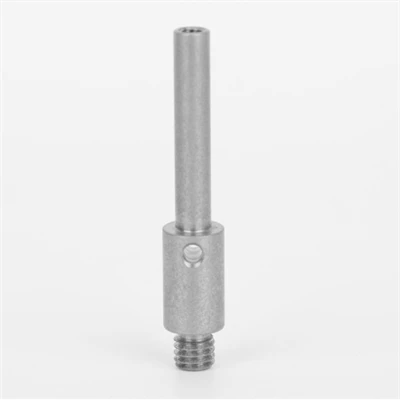
![Special & Stepped Shafts]() Special & Stepped ShaftsAotian special-shaped stepped shafts are processed from high-quality cold heading fine wire, widely used in...read more
Special & Stepped ShaftsAotian special-shaped stepped shafts are processed from high-quality cold heading fine wire, widely used in...read more -
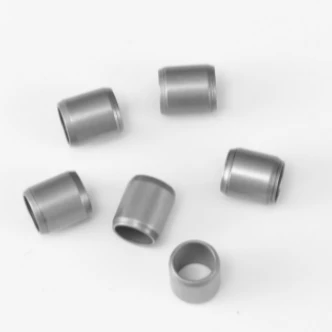
![Sleeves & Bushings]() Sleeves & BushingsAotian sleeve bushings are made of cold heading fine wire for automotive, motorcycle and other applications.read more
Sleeves & BushingsAotian sleeve bushings are made of cold heading fine wire for automotive, motorcycle and other applications.read more -
![SAE1008 For Screws And Rivets]() SAE1008 For Screws And RivetsCold-drawn low-carbon steel wire is made from ordinary carbon steel hot-rolled coils with a diameter of 6.5 or 8 mm,...read more
SAE1008 For Screws And RivetsCold-drawn low-carbon steel wire is made from ordinary carbon steel hot-rolled coils with a diameter of 6.5 or 8 mm,...read more -
![Cold Drawn Wire CH1T]() Cold Drawn Wire CH1TCH1T is a kind of alloy structural steel, which has suitable hardenability, and after suitable metal heat treatment,...read more
Cold Drawn Wire CH1TCH1T is a kind of alloy structural steel, which has suitable hardenability, and after suitable metal heat treatment,...read more

Send Inquiry