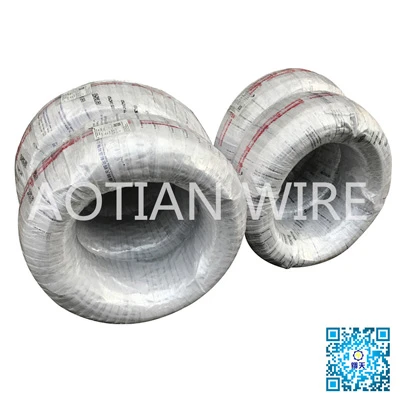

What Is Fastener Steel Wire
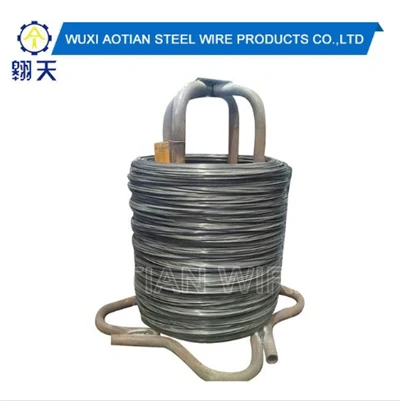
Fastener steel wire is a high-strength, low-carbon steel wire produced through a specialized process called cold heading. This process involves drawing the wire through a series of dies, gradually reducing its diameter and increasing its strength. Fastener steel wire refers to the steel wire used to fabricate critical fastening components such as screws, bolts, nuts, rivets, and nails. This wire forms the foundation of strength for countless consumer products, construction applications, and critical infrastructure.

Advantages of Fastener Steel Wire
High tensile strength
Fastener steel wire must be able to withstand significant pulling forces without breaking.
Good ductility
The wire needs to be malleable enough to be formed into different shapes without cracking.
Excellent surface finish
A smooth surface finish is crucial for ensuring proper grip and preventing corrosion.
Uniformity
Every piece of fastener steel wire must meet the same strict standards to guarantee consistent performance.
-
![SAE1008 For Screws And Rivets]() SAE1008 For Screws And RivetsCold-drawn low-carbon steel wire is made from ordinary carbon steel hot-rolled coils with a diameter of 6.5 or 8 mm, which are drawn into round steel wires with a diameter of 3, 4, or 5 mm at room...read more
SAE1008 For Screws And RivetsCold-drawn low-carbon steel wire is made from ordinary carbon steel hot-rolled coils with a diameter of 6.5 or 8 mm, which are drawn into round steel wires with a diameter of 3, 4, or 5 mm at room...read more -
![Cold Drawn Wire CH1T]() Cold Drawn Wire CH1TCH1T is a kind of alloy structural steel, which has suitable hardenability, and after suitable metal heat treatment, the microstructure is homogeneous sohnite, bainite or very fine pearlite, and...read more
Cold Drawn Wire CH1TCH1T is a kind of alloy structural steel, which has suitable hardenability, and after suitable metal heat treatment, the microstructure is homogeneous sohnite, bainite or very fine pearlite, and...read more -
![Steel Wire SCR420]() Steel Wire SCR420cold heading steel wire SCR420 with SAIP condition, mainly used for producing screws.read more
Steel Wire SCR420cold heading steel wire SCR420 with SAIP condition, mainly used for producing screws.read more -
![Wire Rod SWRCH22A]() Wire Rod SWRCH22ALow Carbon Quality 6.5mm SWRCH22A Steel Wire Rod With Good Price,The wire rod has a wide range of uses. In addition to being directly used as building reinforcement, it can also be processed into...read more
Wire Rod SWRCH22ALow Carbon Quality 6.5mm SWRCH22A Steel Wire Rod With Good Price,The wire rod has a wide range of uses. In addition to being directly used as building reinforcement, it can also be processed into...read more -
![Cold Forging Steel Wire C1006]() Cold Forging Steel Wire C1006C1006 is a kind of low carbon steel material, with high elongation, smooth surface, mirror effect, thickness standard, flat shape, rust resistance and other characteristics,If you need C1006 Cold...read more
Cold Forging Steel Wire C1006C1006 is a kind of low carbon steel material, with high elongation, smooth surface, mirror effect, thickness standard, flat shape, rust resistance and other characteristics,If you need C1006 Cold...read more -
![Boron Carbon Steel Wire 10B21]() Boron Carbon Steel Wire 10B21Cold Drawn Wire 10b21 Phosphate Coated Class 8.8 Boron Carbon Steel Wire for Making Fasteners,As a typical cold heading steel, 10B21 has good plasticity, moderate strength and obvious heat...read more
Boron Carbon Steel Wire 10B21Cold Drawn Wire 10b21 Phosphate Coated Class 8.8 Boron Carbon Steel Wire for Making Fasteners,As a typical cold heading steel, 10B21 has good plasticity, moderate strength and obvious heat...read more -
![Cold Drawn Hard Iron Wire SAE1006]() Cold Drawn Hard Iron Wire SAE1006Cold Drawn Hard Iron Wire SAE1006 is a kind of low carbon steel material,with high elongation, smooth surface, mirror effect, thickness standard, flat shape, rust resistance and other...read more
Cold Drawn Hard Iron Wire SAE1006Cold Drawn Hard Iron Wire SAE1006 is a kind of low carbon steel material,with high elongation, smooth surface, mirror effect, thickness standard, flat shape, rust resistance and other...read more -
![Binding Wire]() Binding WireHigh quality Black Annealed Wire Black Iron Binding Wire Factory Price,Application of the galvanized wire : The products are widely used in building, handicrafts, silk screen weaving, expressway...read more
Binding WireHigh quality Black Annealed Wire Black Iron Binding Wire Factory Price,Application of the galvanized wire : The products are widely used in building, handicrafts, silk screen weaving, expressway...read more -
![70# Spring Steel Wire]()
-
![Cold Drawn 10b21 Steel Wire]() Cold Drawn 10b21 Steel Wire10b21 Basic Info. Model NO. 10b21 Delivery Time Among 20 Days for a 20gp Container Transport Package Sea-Worthy Package Specification 8.0~15.0mm Trademark AOTIAN WIRE Origin Wuxi, Jiangsu, China...read more
Cold Drawn 10b21 Steel Wire10b21 Basic Info. Model NO. 10b21 Delivery Time Among 20 Days for a 20gp Container Transport Package Sea-Worthy Package Specification 8.0~15.0mm Trademark AOTIAN WIRE Origin Wuxi, Jiangsu, China...read more -
![Rivet Wire 45#]() Rivet Wire 45#Cold Heading Quality Drawn Annealed 45# Fastener Phosphate Coated for Making Rivets Chq Steel Wireread more
Rivet Wire 45#Cold Heading Quality Drawn Annealed 45# Fastener Phosphate Coated for Making Rivets Chq Steel Wireread more -
![CHQ C1022]()


Why Choose Us
1.Professional team
We insist offering first-class prodcuts and best service to customers around the world for 20 years.
2.Safety assurance
We have obtained ISO9001and IATF16949 Certificates. And also get SGS along with TCT product certificates.
3.Production market
Our products not only share big market in China but also export to many other countries for more than 10 years, such as Europe, Middle East and Central Asia.
4.Complete after-sale service
Our management idea is profession, learning, innovation and transcendence. We are ready to provide products of high quality and the best service for our customers.
Types of Fastener Steel Wire
Chq (cold headed quality) wire
This is the most widely used type of fastener steel wire, known for its excellent strength and ductility. It is ideal for screws, bolts, nuts, and other general-purpose fasteners.
Hb wire (half hard bright)
This type of wire is slightly harder and more wear-resistant than chq wire, making it suitable for high-stress applications.
Stainless steel wire
As the name suggests, this wire is made from stainless steel, offering superior corrosion resistance. It is often used in outdoor environments or applications requiring high hygiene standards.
High-strength steel wire
This type of wire is designed for applications requiring exceptional strength, such as heavy-duty construction and machinery.
Fastener Steel Wire Grades and Specifications
With so many structural and mechanical devices relying on the strength and reliability of fasteners, standards organizations have developed rigorous specifications and grade identification systems for fastener wire and finished fasteners. Engineers select fastener wire and products matched to their application’ s environmental conditions, quality requirements and structural demands.
Key properties used to determine appropriate fastener wire grades include. The yield strength, tensile strength and hardness of fastener wire impacts the anchoring performance of threaded, driven, or pressed fasteners. Harder wire provides greater shear and tensile strength up to risk of becoming brittle. Zinc and other metallic coatings, along with newer engineered polymer coatings provide corrosion resistance and lubricity during fastener installation and service life. Grade markings like SAE J429, ASTM F568, and ISO 898-1 allowing traceability to certified fastener wire and mechanical properties data. Other stamped markings identify manufacturer and heat treatment details.
Environmental, cost and specific application demands determine the optimal fastener wire grade and resulting fastener used in a given consumer product, infrastructure, or structural assembly. Trained engineers make these choices based on building codes and industry standards guiding structural and infrastructure integrity.
The Importance of Quality Fastener Steel Wire

Fastener failure
This can have disastrous consequences, especially in critical structures or equipment.

Corrosion
Rust and other forms of corrosion can weaken fasteners, compromising their integrity and leading to structural failure.

Installation problems
Low-grade wire can be difficult to work with, leading to delays and frustration during the construction process. By choosing high-quality fastener wire, you can ensure that your projects are built to last and meet all safety standards.
Common Uses of Fastener Steel Wire in Industrial Settings
Reinforcement in concrete
Fastener steel wire is often used as reinforcement in concrete structures such as bridges, buildings, and roads.
Fencing and security
Fastener steel wire is used to manufacture fencing for security purposes, such as perimeter fencing for industrial facilities, airports, and military installations.
Manufacturing of springs
Springs used in various industrial equipment and machinery are often made from fastener steel wire due to its resilience.
Automotive industry
Fastener steel wire is used in the automotive industry for applications such as tire reinforcement, seat springs, wire harnesses, and suspension components.
Cable and wire rope
Fastener steel wire is a key component in the production of cables and wire ropes used in lifting and hoisting equipment, elevators, cranes, and marine applications.
Mesh and netting
Fastener steel wire mesh and netting are used in construction, agriculture, and mining.
Electrical conductors
High-strength fastener steel wire is used as conductors in electrical power transmission and distribution lines due to its conductivity and mechanical properties.
Fasteners and hardware
Fastener steel wire is used to manufacture fasteners such as nails, screws, bolts, and wire forms.
How Are Fastener Steel Wires Created?
Requirements for fastener materials in terms of mechanical properties, especially strength. The requirements of working conditions on the corrosion resistance of materials. The requirements of the working temperature on the heat resistance (high temperature strength, oxidation resistance) of the material. Requirements for material processing performance in terms of production technology. Other aspects, such as weight, price, and purchasing factors should be considered. After comprehensive and comprehensive consideration of these five aspects, the grades, varieties, specifications and material standards of the selected fasteners are finally determined.
To begin, fastener steel fastener steel wire is treated in a consistent, high-temperature environment for a set duration of time called soft annealing. The duration in which the material stays in this environment depends on the thickness of the fastener steel wire. Soft annealing heats the metal above its recrystallization temperature, but below its melting point, causing new grains to form without any residual stresses. Once the inner core has reached the appropriate temperature, the metal is slowly cooled for new grains to develop. The result is steel that is more workable, reduced hardness, and increased ductility (a material’ s ability to draw into a fastener steel wire.)
Proper installation is important to ensure your blanket functions properly and operates optimally. Exposed areas of your instrument may result in a less efficient product. Follow these steps for optimal installation of your removable insulation. Before installation, ensure you have a fastener steel wire twisting tool to create loops in the following steps. Form and compress the blanket around the instrument. Continue working your way around the instrument until the seams of each end of the blanket are as close as possible to one another. Form a loop with the stainless-steel fastener steel wire fastener and hook it around the first rivet. Pull and wrap the steel fastener steel wire around the second rivet, ensuring it is tightened and secured. Continue lacing the fastener steel wire around each rivet, alternating between each end until you reach the length of the blanket. Cut and wrap any excess fastener steel wire around the final rivet.
Precautions for Fastener Steel Wire
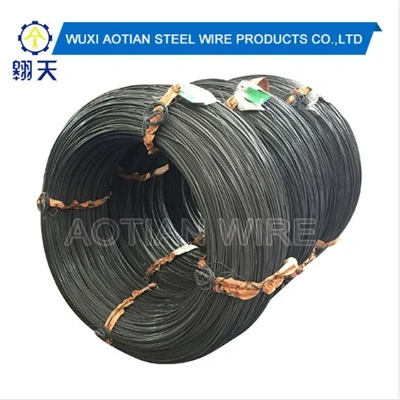
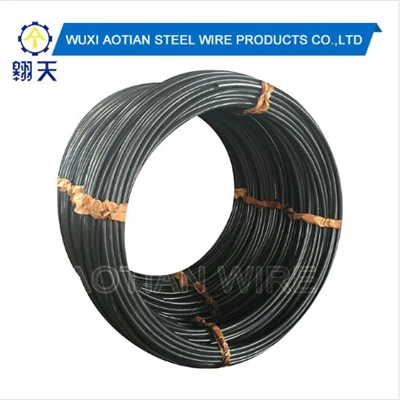
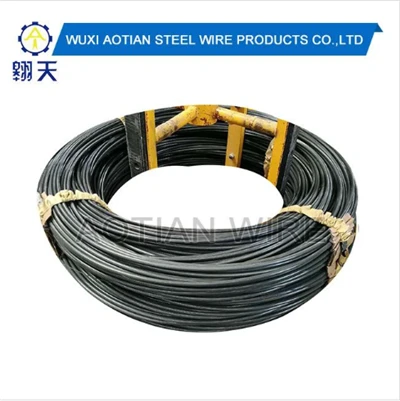
Select the right grade
There are many different grades of fastener steel wire. The two commonly used grades are 304 and 316, with 316 being more corrosion resistant than 304. The rule of thumb is that if the fastener is in a corrosive environment, 316 is preferable, particularly if the fastener is to be seen, as 316 is less likely to 'tea-stain' or develop a brown discolouration . The nickel institute have provided a great design guideline for the selection and use of fastener steel wire to help with this.
Lubricate threads
Top stainless fastener engineers recommend that all fastener steel wire threads should be lubricated before being assembled, to reduce the risk of galling (this is when threads lock up). We have found the most risk of galling is with larger threads (m16 upwards), and also when using nyloc nuts.
Select the right surface finish
The smoother or more polished the finish, the better the corrosion resistance. Some stainless products have a brushed, satin or 'rougher' finish , sometimes on hinges, fittings, down pipes. This type of finish can trap minute particles which damage the protective chromium oxide layer on the fastener steel wire, causing 'tea-staining', and therefore giving a rusty appearance. This is made worse if the fastener steel wire is not exposed to rainwater to wash off the particles.
Consider electropolishing
Electro-polishing or passivating (forms of acid treatment) improves corrosion resistance by thickening the naturally occurring protective chromium oxide layer that forms on fastener steel wire. All stainless fasteners supplied are passivated and can also be electro-polished upon request.
Establish and follow a cleaning schedule
Fastener steel wire products 'on show' need to be cleaned to remove contaminants and therefore maintain the fastener steel wires appearance.
Consider exposure to rainwater
Fastener steel wire resists corrosion due to its naturally occurring protective layer. When contaminants settle on fastener steel wire, depending on the grade and the surface finish, these can damage this protective layer, allowing oxygen to react with the iron. In the fastener steel wire causing it to rust. If the fastener steel wire is exposed to rainwater, then this should wash these contaminants away, restoring the fastener steel wire's protective layer. Therefore if fastener steel wire is going to be sheltered from the rain, and it is in a corrosive environment, then consider options to enhance the corrosion resistance: Select a more corrosion resistant grade; a smooth/polished/mirror finish; and electro-polishing.
Contaminate
This is where your tools pass on minute contaminants (e.G. Iron fillings). This rust on the surface of the fastener steel wire can kick-start corrosion. This can also occur when iron fillings from grinding steel are blown onto fastener steel wire. How do you reduce the risk of contamination? Drive/screw tips should ideally be chrome vanadium steel. Allen keys should be hardened-chrome plated. Cutting wheels should be made from aluminium oxide, be 'iron' or 'carbon-steel' free, or be labelled 'for fastener steel wire'. Hammers should be good quality hardened-chrome plated steel or fastener steel wire.
Cause galvanic corrosion
This is where two dissimilar metals are in contact, react and cause corrosion. For example, lead or copper flashings on a zinc/aluminium roof. Galvanic corrosion may be a risk for the other metals when they are in contact with fastener steel wire and the join is wet. We recommend investigating situations where you have concerns related to possible galvanic corrosion. Isolating metals with tef-gel or nylon/rubber barriers is a way to keep the metals apart to reduce the risk of this occurring. Note however, it still may occur when one metal might be contaminated by another after water passes from one to the other.
What Are the Best Ways to Store Fastener Steel Wire

Considering the wide range of applications that fasteners have in the manufacturing, assembly and production industries, it’ s remarkable that there isn’ t more attention on how you store your fasteners. The incorrect approach to fastener storage can cost you time and money in manufacturing and assembly, especially if you depend on specialty fasteners. Certain fasteners may have special storage requirements, but even ordinary nuts and bolts will need an organized system to ensure each component and assembly uses the correct item every time. It manufacture the depend on one of the most complex assembly processes today and would struggle if they didn’ t have innovative fastener storage and handling solutions.

If you deal with more complex product ranges, you’ ll need to pay close attention to your fastener storage strategy. The same considerations will apply when you use structural bolting components on a job site, where a quality issue could lead to major failures that put your organization at risk. Incorrect or ad hoc storage strategies lead to greater rates of loss that could lead to work stoppages and increased costs. If the storage strategy doesn’ t support the assembly and manufacturing process, then you’ ll end up with reduced production quantities during every shift. Most fasteners require storage that limits exposure to the elements and temperatures that damage the integrity of the threads due to increased oxidization. Lot traceability may be a vital part of the manufacturing, construction, or production process. Incorrect storage can compromise your product quality. Each of these issues can lead to minor issues or major failures in your assembly process. Developing a fastener storage strategy can help increase productivity, ensure quality, and save you money.

Depending on the type of fastener, the material, and the application, the proper way to store your components should always follow the manufacturer’ s instructions. You should also consider process requirements that support your production line when developing a fastener storage strategy. If you use uncoated fasteners in your assemblies, you should reduce the effects of corrosion by using airtight storage containers. Reducing contact between water in the air will also limit rust which makes your fasteners unsuitable for the application. While it may require more storage space, keeping different types of fasteners apart reduces the chances of metal-to-metal reactions and ensures the quality of the items for longer periods. You’ ll also be able to find the right fastener quickly, saving you time during the assembly process.When you depend on high-quality, high-strength nickel and alloy fasteners, take additional care to protect these during storage.
Our Factory
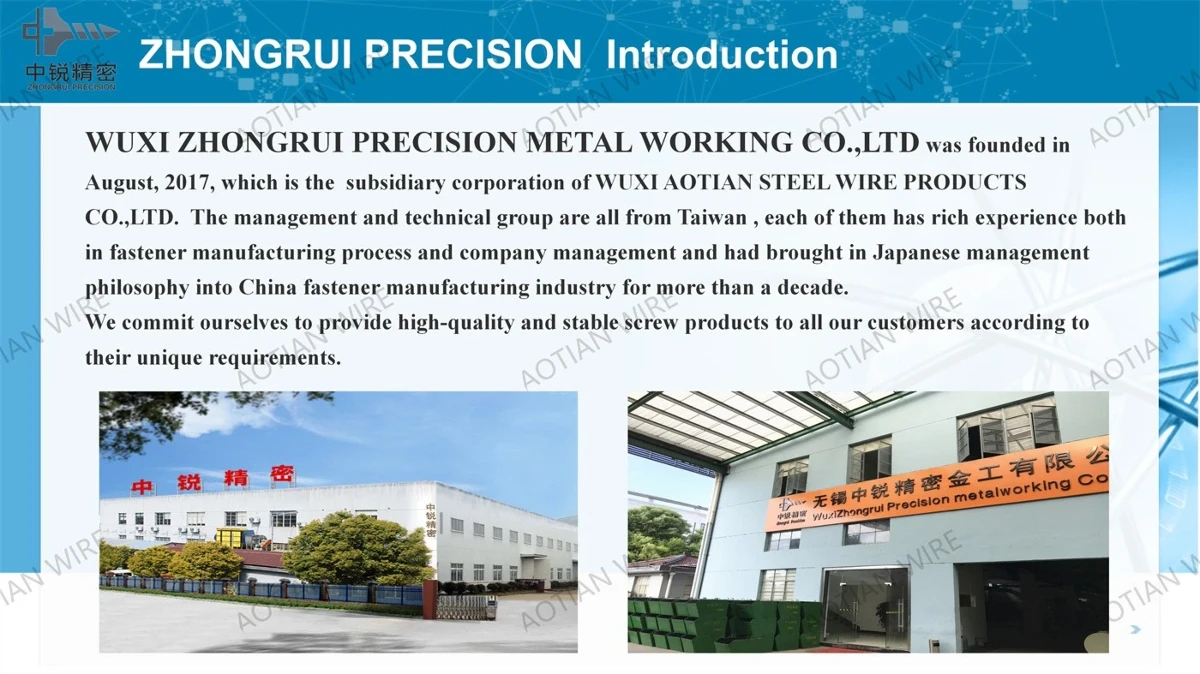
Wuxi AoTian Steel Wire Products Co., Ltd (original: Wuxi HuaTian Standard Piece and Wire Drawing Co., Ltd) was founded in 2000. Our company specializes in manufacturing advanced steel wire products, such as carbon steel spheroidized wire, alloy steel spheroidized wire and rivet wire for cold heading and so on. Our production capacity can reach 40,000 ton per year. Our products are widely used in making auto, aerospace and ship fasteners, precisional electronic screws, high strength bolts and nuts and self-drilling screws and other irregular parts and so on.



Our certificate


FAQ
As one of the leading fastener steel wire manufacturers and suppliers in China, we warmly welcome you to wholesale fastener steel wire for sale here from our factory. All customized products made in China are with high quality and low price. For free sample, contact us now.
-
![SAE1008 For Screws And Rivets]() SAE1008 For Screws And RivetsCold-drawn low-carbon steel wire is made from ordinary carbon steel hot-rolled coils with a diameter of 6.5 or 8 mm,...read more
SAE1008 For Screws And RivetsCold-drawn low-carbon steel wire is made from ordinary carbon steel hot-rolled coils with a diameter of 6.5 or 8 mm,...read more -
![Cold Drawn Wire CH1T]() Cold Drawn Wire CH1TCH1T is a kind of alloy structural steel, which has suitable hardenability, and after suitable metal heat treatment,...read more
Cold Drawn Wire CH1TCH1T is a kind of alloy structural steel, which has suitable hardenability, and after suitable metal heat treatment,...read more -
![Steel Wire SCR420]() Steel Wire SCR420cold heading steel wire SCR420 with SAIP condition, mainly used for producing screws.read more
Steel Wire SCR420cold heading steel wire SCR420 with SAIP condition, mainly used for producing screws.read more -
![Wire Rod SWRCH22A]() Wire Rod SWRCH22ALow Carbon Quality 6.5mm SWRCH22A Steel Wire Rod With Good Price,The wire rod has a wide range of uses. In addition...read more
Wire Rod SWRCH22ALow Carbon Quality 6.5mm SWRCH22A Steel Wire Rod With Good Price,The wire rod has a wide range of uses. In addition...read more