
What Are Standard Screws
Standard screws, also known as metric thread screws, are characterised by having a standardised thread pitch according to different systems. The metric system for measuring screw threads uses metric units, pitch in millimeters (mm). This is the distance measured between the peaks of two adjacent threads. Whereas, the standard system - the imperial system - measures threads in imperial units by TPI: threads per inch. The nominal length of a screw is usually, though not always, measured from below the head to the tip of the screw. If no head exists, such as on a grub screw or threaded bar, the screw would be measured from end-to-end.
Advantages of Standard Screws
Highly reliable and durable
First and foremost, standard screws are highly reliable and durable. They can withstand immense pressure, tension, and shear forces, ensuring long-lasting performance. Made from robust materials like brass, titanium, and stainless steel, these fasteners are resistant to corrosion, wear and tear, and environmental factors.
Precision and consistency
Another key advantage of standard screws are their precision and consistency. These components are manufactured using high-precision machinery, which ensures their accuracy and uniformity. This precision and consistency ensure that the screws and fasteners can fit perfectly and securely into their respective mating parts. Moreover, the uniformity of the threads makes it easier to tighten or loosen the screws without causing damage to the surrounding parts.
Ease of use
Standard screws are easy to install using simple tools like screwdrivers or power drills, making them accessible for DIY projects and professional applications.
Secure fastening
When properly installed, standard screws provide a secure and reliable connection between two or more components, ensuring stability and strength.
-
![DIN7505 Drywall Screw]() DIN7505 Drywall ScrewAoTian Steel Wire are a professional manufacturer for different kinds of fastener products. If you want to know Black Phosphated Bugle Head DIN7505 Drywall Screw Factory Price,please contact us...read more
DIN7505 Drywall ScrewAoTian Steel Wire are a professional manufacturer for different kinds of fastener products. If you want to know Black Phosphated Bugle Head DIN7505 Drywall Screw Factory Price,please contact us...read more -
![Drywall Screws/Nails]() Drywall Screws/NailsCarbon Steel Wire Rod High Tensile Strength Professional Supplier Coils tandard Screws With Excellent Quality,AoTian Steel Wire have a strict quality system, the raw materials of each order will...read more
Drywall Screws/NailsCarbon Steel Wire Rod High Tensile Strength Professional Supplier Coils tandard Screws With Excellent Quality,AoTian Steel Wire have a strict quality system, the raw materials of each order will...read more -
![Truss Head Screw]() Truss Head ScrewWe supply Truss Head Screw for you, we are the manufacturer, welcome to contact us for more information.read more
Truss Head ScrewWe supply Truss Head Screw for you, we are the manufacturer, welcome to contact us for more information.read more -
![C1022 Hardened Black Zinc Phosphated Drywall Screws]() C1022 Hardened Black Zinc Phosphated Drywall ScrewsWe offer you C1022 Hardened Black Zinc Phosphated Drywall Screws, we are the manufacturer.read more
C1022 Hardened Black Zinc Phosphated Drywall ScrewsWe offer you C1022 Hardened Black Zinc Phosphated Drywall Screws, we are the manufacturer.read more -
![Drywall Screw Yellow Zinc Plated]() Drywall Screw Yellow Zinc PlatedBugle Head Phillips Drive Drywall Screw Yellow Zinc Plated Hardenread more
Drywall Screw Yellow Zinc PlatedBugle Head Phillips Drive Drywall Screw Yellow Zinc Plated Hardenread more -
![Black Drywall Screw]() Black Drywall ScrewBlack Carbon Steel M3.5 Phillips Bugle Head Phosphated Self-tapping Coarse Thread Drywall Screw,If you want Black Phosphated Bugle Head DIN7505 Drywall Screw Factory Price,please contact AoTian...read more
Black Drywall ScrewBlack Carbon Steel M3.5 Phillips Bugle Head Phosphated Self-tapping Coarse Thread Drywall Screw,If you want Black Phosphated Bugle Head DIN7505 Drywall Screw Factory Price,please contact AoTian...read more -
![Self Drilling Screws DIN7504]() Self Drilling Screws DIN7504Stainless Steel Countersunk Phillips Head Self Drilling Screws DIN7504read more
Self Drilling Screws DIN7504Stainless Steel Countersunk Phillips Head Self Drilling Screws DIN7504read more -
![Core-Pulling Blind Rivets]() Core-Pulling Blind RivetsM4 304 Ss Stainless Steel Aluminum Round Head machine Pop Core-Pulling Blind Rivetsread more
Core-Pulling Blind RivetsM4 304 Ss Stainless Steel Aluminum Round Head machine Pop Core-Pulling Blind Rivetsread more -
![Iron Steel Wire Nail]()
-
![Stainless Steel Self Tapping Screw]()
-
![DryWall Nails]()
-
![Self Drilling Roof Screw]() Self Drilling Roof ScrewCustom Fastener Metal Flange Hex Zinc Plated Washer Head Self Drilling Roof Screw for Woodread more
Self Drilling Roof ScrewCustom Fastener Metal Flange Hex Zinc Plated Washer Head Self Drilling Roof Screw for Woodread more


Why Choose Us
1.Professional team
We insist offering first-class prodcuts and best service to customers around the world for 20 years.
2.Safety assurance
We have obtained ISO9001and IATF16949 Certificates. And also get SGS along with TCT product certificates.
3.Production market
Our products not only share big market in China but also export to many other countries for more than 10 years, such as Europe, Middle East and Central Asia.
4.Complete after-sale service
Our management idea is profession, learning, innovation and transcendence. We are ready to provide products of high quality and the best service for our customers.
The Basics of Standard Screws
The standard screws is a fastener that uses a helical groove, called a thread, cut into the outside of a cylindrical rod. It mates with a reverse helical groove cut into the inside of a cylindrical hole, either in a solid body or a small object called a nut. Turning the standard screws into the mating threaded hole advances the standard screws into the mating surface. If the standard screws is first passed through an object, turning the standard screws until the object and the mounting surface are joined mounts the object to the surface.The key specifications for a standard screws are its major diameter, thread pitch (or its reciprocal thread count per unit length), and length. The major diameter is the diameter measured at the outside of the standard screws threads. The thread pitch is the distance the standard screws advances in one turn, or the distance between peaks of adjacent threads. The reciprocal of the thread pitch is the thread count per unit length. For the US and Canada, the unit length is the inch (in.). In countries using metric standard screws specifications, it is millimeters (mm). The standard screws length is the distance from the bottom of the standard screws to the reference plane. The reference plane is where the standard screws contacts the mating surface. For round head and similar standard screwss, it is at the base of the standard screws head. For a flat head standard screws, which sits in a counter sunk hole, it is at the top of the standard screws head.
The thread standard most commonly used in North America is the Unified Thread Standard (UTS). UTS standard screwss are specified by their nominal diameter and thread count. For example, a ¼-20 is a standard screws with a diameter of ¼ of an inch and a thread count of 20 threads/in. standard screwss with diameters less than ¼ inch are specified by an integer number, 0-16. standard screwss with diameters less than 0 are described by the numbers 00, 000, and 0000. As an example, the standard screwss used in eyeglasses are typically 00-72. The lower or coarser thread counts are specified as Unified Coarse Thread (UNC). The standard screwss with a finer pitch are described as Unified Fine Thread (UNF). Note that for each standard screws diameter there are two possible thread counts, so a #10 standard screws is available with thread counts of 24 or 32 threads/in. The absolute diameters of the standard screwss using gauge number integers can be calculated by multiplying the gauge number by 0.013 and adding the product to 0.060 inches. Thus, a #6 standard screws has a diameter of (6 x 0.013) + 0.060 = 0.138 in.
There is also a metric standard screws standard. These are designated by the letter M, followed by the standard screws’ s major diameter in mm, then the thread pitch also in mm. The fine pitch threads offer more choices of standard screws diameters than the coarse series, but only the overlapping diameters. As in the case of the UTS standard screwss, metric standard screwss are available in two thread pitches for each diameter. Remember that the standard screws pitch is the reciprocal of the thread count per mm.
Standard screwss are manufactured with a variety of head shapes. Each head shape provides specific advantages. For example, a flathead standard screws is generally countersunk so that the head is completely below the surface into which the standard screws is driven. This keeps the surface free of projections. All of the drive types shown, except for the hex head, require an appropriate standard screwsdriver. The hex head standard screwss use a wrench or nut driver. The application determines the selection of the drive type. Most standard screwss advance when rotated in a clockwise direction. This is called a right-hand thread. A less commonly used thread is the left-hand thread, where the standard screws advances when turned counterclockwise.
Size Classification of Standard Screws
Manufacturers produce screws in both imperial and metric units, and due to their explicit correspondence with nuts and pretapped holes, the units cannot be mixed. Furthermore, screws are produced with fine or coarse threads, which are a designation of the screw's thread pitch--not the quality of the product. Coarse-thread screws are less susceptible to galling, thread crossing, and seizing, while fine-thread screws are less likely to loosen from jostling, and are more easily tapped and adjusted. For screws that cut their own threads in a soft material, there is no need to determine the thread type.
For imperial sizes, screw producers will provide a designated number or fractional inch for the dimension of the screw. North American countries follow this system, called the Unified Thread Standard. Also included will be a "threads per inch" (TPI) count which will indicate a course or fine thread.
ISO, JIS, and DIN standards are based upon the metric system and are closely related (ISO guideline 261). Most hardware measured in metric units is subject to Society of Automotive Engineers (SAE) edict as well. These standards are common in the majority of the world, and speculation exists that this may become a global hardware standard. The threads on screws can be available in both fine and course pitch configurations.
How to Choose the Right Type of Standard Screws
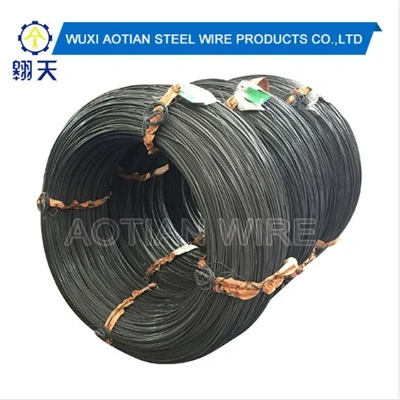
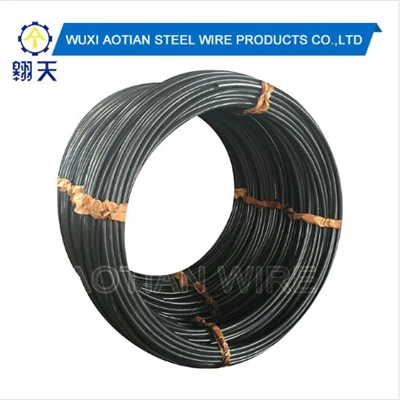
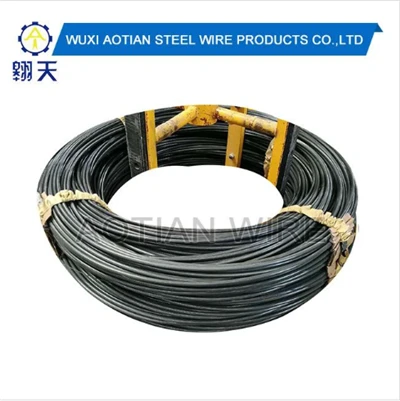
Head: Which has slots in the top to fit a compatible standard screwsdriver/drill bit.
Shank: The straight part of the standard screws which connects the head and thread.
Thread: The spiral grooves which run down the length of the standard screws.
Point: The end of the standard screws that’ s first driven into the material when a rotational force is applied.
A huge selection is available for a wide range of applications. They can be classified by the type of material they’ re made from, such as brass, stainless steel, carbon steel, etc., their size (diameter and length) and the different standard screws head types, drive types and thread types.
The standard screwss you choose will depend on the task. Things to consider are the thickness, density, and strength of the substrate material, the size and weight of the load they need to hold, and the risk of the material tearing or splitting. For example, the length should be long enough to securely hold the materials together but not so long that it passes through the other side. They should be thick enough not to be bent out of shape by hard materials but not so thick that they will split delicate materials.
Standard screwss are often sold singularly or in packs of varying quantities. Check how many you’ ll need before you buy, as you can often save money by buying larger packs. If you’ re removing existing standard screwss before fitting new, check the standard screws head type to ensure you have compatible tools. If they’ re rusty and difficult to remove, try striking them on the head with a hammer to loosen the rust, then apply a lubricant. Leave that to work for a while, then try to remove it again. If the standard screws is at risk of stripping, re-cut notches into the head to give the standard screwsdriver a better grip. And if that also fails, heat the standard screws with a blowtorch or something similar (as long as the surrounding material is non-flammable) and cool it quickly with water. This will cause the rust to crack away.
Before buying standard screwss, consider the type of project you need them for. Although some are designed for multipurpose use, others are more specialised and are designed for specific applications. Using the right type for the job will ensure they can take the load and stay securely in place. It’ s essential that the standard screwss you use are compatible with the type of material you are standard screwsing into, as using the wrong type can cause them to bend, break or work themselves loose. Using the right standard screwss for the material will ensure they have a firm grip. Also, consider the thickness of the material as this dictates the gauge and length of standard screws required.
Materials and Finishes of Standard Screws

Standard screws material and finish are key factors in the type of work the standard screws can handle and where you should use it. Some materials let standard screwss handle heavier loads, while some help prevent rusting or corroding. If the material is susceptible to corrosion from moisture, there are several finishes that can provide corrosion resistance.

Steel is the most common material for standard screws, but it corrodes when it contacts moisture. Steel standard screwss need a corrosion-resistant coating or plating to protect them from moisture. Some common coatings and finishes are zinc plating, hot-dipped galvanized and black phosphate. There are several other finishes including powder-coated paint, electrocoated paint (e-coat), polymer, ceramic and some proprietary coatings that make steel standard screwss corrosion-resistant. Decorative finishes, such as brass, chrome and nickel plating, add some corrosion protection but are best for indoor applications. Bright steel standard screwss have no corrosion-resistant coating and are for interior use where they won’ t contact moisture.Additional standard screws materials include stainless steel, brass, bronze and aluminum.
Standard Screw Sizes
Numbering systems
Standard screwss have standard u.S. And metric numbering systems. Metric standard screws measurements list the diameter in millimeters first and thread pitch second. Examples: 4 mm x 0.7; 5 mm x 0.8; and 6 mm x 1.0. U.S. Standard numbering systems list diameter sizes 0, 1, 2 ,3, 4, 5, 6, 7, 8, 9, 10, 12, 14 and 16, and fractional sizes from 1/4" to 2" in 1/16" increments, followed by a dash and the threads per inch (from about 6 to 80), and the length.
Standard screws diameter
Standard screws diameter, the first number listed in the size charts, must match the inner diameter of the matching nuts and washers. Diameter is measured at the shaft, just under the standard screws head. Sizes 0 (3/50 inch) to 16 (3/8 inch) were standardized using hardware sizing systems already in use at the time. Standard screws diameters measured in standard u.S. Fractions of an inch were added more recently. Increases in the numbers (0-16) coincide with increases in shaft and head diameters, but not standard screws length. Each diameter size may have a different length, depending on the job.
Standard screws threading
The second number on standard screws size charts, following the hyphen, refers to the number of threads per inch of standard screws shaft. So a standard screws sized 1/4-28 is 1/4" in diameter with 28 threads per inch, and a #6-32 standard screws has 32 threads per inch on its shaft.
Length
Pan head standard screws (round heads) length is measured from the flat bottom of the head to the standard screws tip. Flat head standard screwss measure length from the top of the head to the standard screws tip. The length is typically the third number listed in sizing charts and follows an "x" (multiplication symbol). So a 5/8-24 x 1" standard screws has a diameter of 5/8", 24 threads per inch and has a 1" shaft. A #8-20 x 3/4" standard screws has 20 threads per inch and a shaft measuring 3/4" in length. Some standard screwss will not measure the threads per inch, only the diameter and length (such as #10 x 1" or 5/16 x 1/2").
Measure the diameter of the standard screws's shaft with your calipers. Machine standard screwss are manufactured with tolerances measured in thousandths of an inch. Simply holding the standard screws against a tape measure or ruler may not give you a measurement that is accurate enough for a proper fit. Place the shaft of the standard screws in between the jaws of your caliper, tighten them until they rest firmly against both sides of the shaft, and read the measurement off the caliper's dial.
Measure the thread pitch with a thread gauge. A thread gauge resembles a spark plug feeler gauge. It will have multiple metal leaves with serrated edges. These edges are designed to match the thread pitch and depth for standard machine standard screwss. Hold the standard screws in one hand while trying the edge of your thread gauge against the standard screws with your other hand. Again, these tolerances will be close, especially on smaller standard screwss. Hold the gauge and standard screws up to the light. The gauge leaf that fits will allow no light between the standard screws's threads and the serrated edge of the gauge. The gauge leaves are marked individually with the thread pitch.
Measure the length of the standard screws with a ruler. Flat head machine standard screwss are measured from the top of the head. standard screwss with round or hexagonal heads are measured from the bottom of the head.
Our Factory
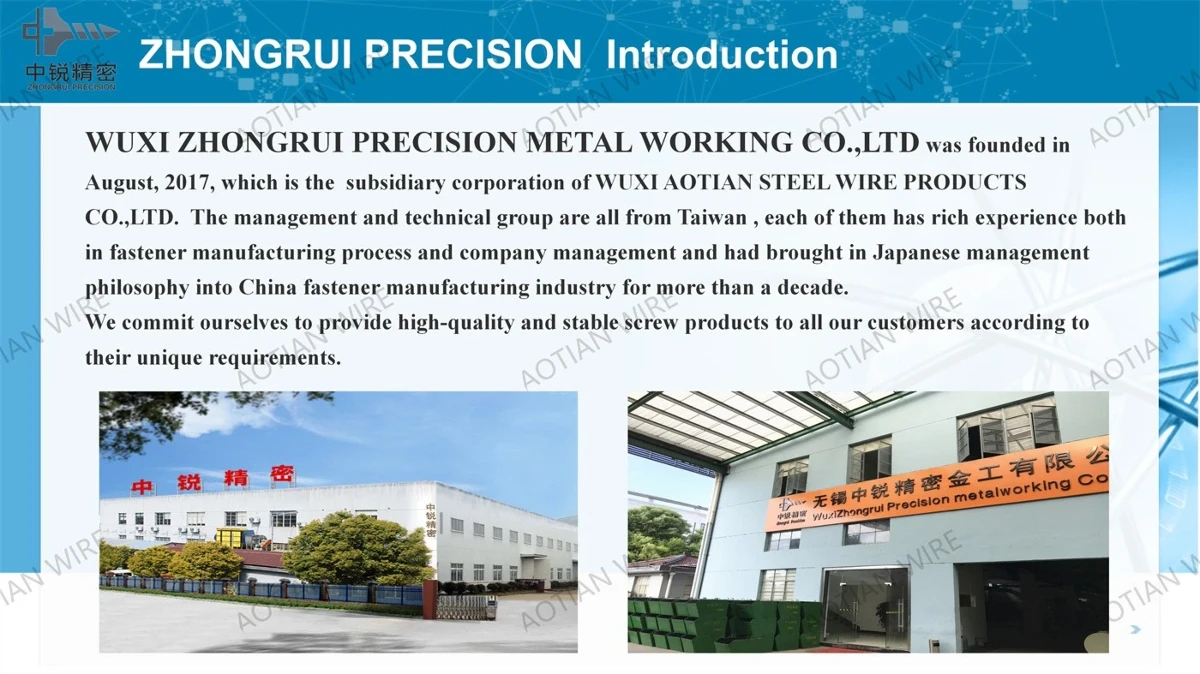
Wuxi AoTian Steel Wire Products Co., Ltd (original: Wuxi HuaTian Standard Piece and Wire Drawing Co., Ltd) was founded in 2000. Our company specializes in manufacturing advanced steel wire products, such as carbon steel spheroidized wire, alloy steel spheroidized wire and rivet wire for cold heading and so on. Our production capacity can reach 40,000 ton per year. Our products are widely used in making auto, aerospace and ship fasteners, precisional electronic screws, high strength bolts and nuts and self-drilling screws and other irregular parts and so on.



Our certificate


FAQ
As one of the leading standard screws manufacturers and suppliers in China, we warmly welcome you to wholesale standard screws for sale here from our factory. All customized products made in China are with high quality and low price. For free sample, contact us now.
Standard Screws, Micro Wood Screws, hardware-
![SAE1008 For Screws And Rivets]() SAE1008 For Screws And RivetsCold-drawn low-carbon steel wire is made from ordinary carbon steel hot-rolled coils with a diameter of 6.5 or 8 mm,...read more
SAE1008 For Screws And RivetsCold-drawn low-carbon steel wire is made from ordinary carbon steel hot-rolled coils with a diameter of 6.5 or 8 mm,...read more -
![Cold Drawn Wire CH1T]() Cold Drawn Wire CH1TCH1T is a kind of alloy structural steel, which has suitable hardenability, and after suitable metal heat treatment,...read more
Cold Drawn Wire CH1TCH1T is a kind of alloy structural steel, which has suitable hardenability, and after suitable metal heat treatment,...read more -
![Steel Wire SCR420]() Steel Wire SCR420cold heading steel wire SCR420 with SAIP condition, mainly used for producing screws.read more
Steel Wire SCR420cold heading steel wire SCR420 with SAIP condition, mainly used for producing screws.read more -
![Wire Rod SWRCH22A]() Wire Rod SWRCH22ALow Carbon Quality 6.5mm SWRCH22A Steel Wire Rod With Good Price,The wire rod has a wide range of uses. In addition...read more
Wire Rod SWRCH22ALow Carbon Quality 6.5mm SWRCH22A Steel Wire Rod With Good Price,The wire rod has a wide range of uses. In addition...read more