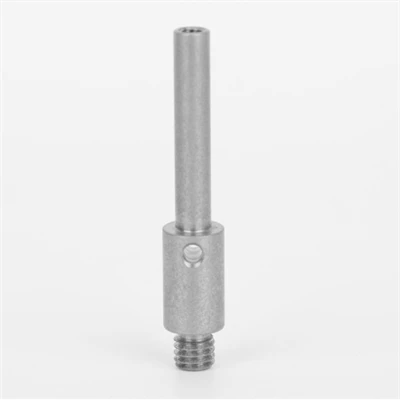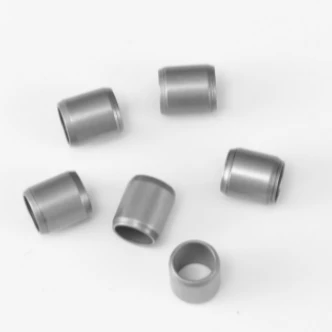

A tenoned bolt is a type of fastener consisting of a head and a screw (a cylinder with external threads). It needs to be matched with a nut and is used to fasten and connect two parts with through holes.
This type of connection is called a bolt connection. If the nut is unscrewed from the bolt, the two parts can be separated, so the tenon bolt connection is a detachable connection.
Countersunk head screws play a role in connecting two or more objects and are an indispensable necessity in daily life or industrial manufacturing.
National standard:
StandardTitle in Chinese: Countersunk head tenon bolt
Standard State StandardState: Current
ReviewAffirmance Date: March 1, 2014
Replaced national standard number ReplacedStandard: GB/T 11-1988[1] [1]
International Standard Classification Number (ICS): 21.060.10
Chinese Standard Classification Number (CCS): J13
Standard Category StandardSort: Product
Competent authority Governor: China Machinery Industry Federation
Responsible unit TechnicalCommittees: National Technical Committee on Fastener Standardization
Drafting organization DraftingCommittee: Institute of Mechanical Standardization
How to use tenon bolts
Cold forging usually uses cold heading plastic processing to form the bolt head. Compared with cutting processing, the metal fibers (metal wires) are continuous along the shape of the product without cutting in the middle, thus improving the product strength, especially the mechanical properties. excellent. The cold heading forming process includes cutting and forming countersunk head tenon bolt processing technology, single-station single-click, double-click cold heading and multi-station automatic cold heading.
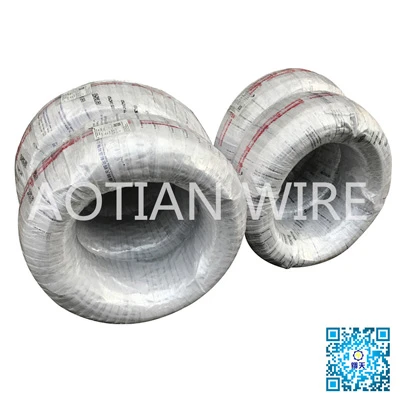
An automatic cold heading machine performs multi-station processes such as stamping, upsetting, extrusion and diameter reduction in several forming dies. The processing characteristics of the original blank used by the single-station or multi-station automatic cold heading machine are determined by the size of the bar material with a length of 5-6 meters or the wire rod steel wire with a weight of 1900-2000KG, that is, the characteristics of the processing technology The cold heading forming method does not use a pre-cut single piece of blank, but uses the automatic cold heading machine itself to cut and upset the blank from the bar and wire rod steel wire (if necessary).
Before extruding the cavity, the blank must be shaped. Through shaping, a blank that meets the process requirements can be obtained. Before upsetting, reducing diameter and forward extrusion, the blank does not need to be shaped. After the blank is cut, it is sent to the upsetting and shaping station. This station can improve the quality of the blank, reduce the forming force of the next station by 15-17%, and extend the life of the mold. Multiple reductions can be used to manufacture bolts.