

Like most other basic mechanisms, metal springs have been around since the Bronze Age. Even as metal, wood was used as a structural member for flexible bows and military catapults. During the Renaissance, precise clocks made precision springs inevitable for the first time. The fourteenth century saw the development of precise clocks that revolutionized astronomical navigation. The exploration and conquest of the world by the European colonial powers continued to provide the impetus for the science and art of watchmaking. Firearms were another area that drove the development of springs. The advent of the Industrial Revolution in the eighteenth century came with the need for large, accurate, and cheap springs. Whereas watchmakers' springs are often handmade, mass-produced springs are made from piano wire or similar materials. Advanced manufacturing methods have made springs ubiquitous. Computer-controlled wire and sheet metal bending machines allow for custom springs Processing, obviously this is a special machine. The spring is just an energy accumulator. It has the function of storing energy, but it cannot slowly release the energy. To achieve this function of slowly releasing it, we should rely on "spring + large "Transmission ratio mechanism" is implemented, which is common in mechanical watches. Spring has been used a long time ago. Ancient bows and crossbows are two types of springs in a broad sense. The inventor of the spring should strictly speaking be the British scientist Robert Hooke ), although helical compression springs had already appeared and been widely used at that time, Hooke proposed "Hooke's law" - the elongation of the spring is proportional to the force exerted. It is based on this principle that in 1776 , the spring balance using helical compression springs came out. Soon, a spring specially made for clocks and watches based on this principle was also invented by Hooke himself. And springs that comply with "Hooke's law" are springs in the true sense. Disc-shaped The spring was invented by the Frenchman Belleville. It is a washer-type spring with a truncated conical cross-section made of metal sheets or forged blanks. After the emergence of modern industry, in addition to disc springs, gas springs, rubber springs, New springs such as scroll springs, mold springs, stainless steel springs, air springs, and memory alloy springs.
Industry landscape
For the spring industry, there has been a long-term passive situation in which the supply of low-end ordinary springs exceeds the demand, and the supply of high-end products (high-strength, high-stress, special-shaped parts, and special materials) exceeds the demand. The output of my country's spring industry has become saturated. According to expert statistics, my country's annual spring production has reached 4 billion pieces. There are 21 major categories and more than 1,600 varieties of spring products, mainly including valve springs, suspension springs, and diaphragm springs. , shock absorbing springs, hydraulic springs, oil pump springs, disc springs, high temperature springs, circlips, tension springs, torsion springs, compression springs, scroll springs and heterosexual springs, etc. The spring industry developed relatively rapidly during the "Eighth Five-Year Plan" and "Ninth Five-Year Plan" periods, especially in Shanghai, Tianjin, Guangzhou, Shandong, Changchun, Chongqing and other regions. Other regions also experienced varying degrees of development. Generally speaking, Better than other industries. Cars, motorcycles, mopeds, internal combustion engines, electrical appliances, instruments, etc. still need to develop. The development of these industries will drive the development of the spring industry. In the face of the macroeconomic situation, the contradictions of low product quality, loose organizational structure, and weak development capabilities that have been accumulated in the industry for a long time have become more prominent. Digging from a deeper level, it is mainly problems in the market, system, and mechanism. Industry Insights researchers believe that as the national economy As the economy transforms from a seller's market to a buyer's market, some deep-seated contradictions, especially structural contradictions accumulated over the years, have become increasingly prominent. The current unreasonable industrial structure is manifested in the following: excess production capacity in some industries and unreasonable product structure; unreasonable technical structure and low level of equipment in major industries; small and scattered enterprise organizations, lack of competitive strength and advantages, and convergence of regional structures that fail to reflect Comparative advantages and collaborative benefits.
develop
Although the spring industry is a small industry in the entire manufacturing industry, its role cannot be underestimated. The country's industrial manufacturing industry and automobile industry must accelerate development, and the spring industry, as one of the basic parts and components, needs an early stage of development in order to adapt to the rapid development of the country's entire industry. In addition, the expansion of the scale and variety of spring products and the improvement of quality levels are also the need for the upgrading of mechanical equipment and the need to improve the performance of supporting hosts. Therefore, spring products play an important role in the development of the entire country's industry. Daily necessities industry and hardware industry, including lighters, toys, locks, door hinges, fitness equipment, mattresses, sofas, etc. In terms of quantity, the demand for springs is the largest, tens of billions of pieces, the technical requirements are not high, and the price is very Low spring prices are generally produced by small spring factories scattered across the country. They have unique advantages in cost and it is difficult for large spring factories to compete with them. As a result, new spring companies are born from time to time. In the future, market demand will grow at an annual rate of 7% to 10%. After China joined the WTO, the export volume of daily hardware products increased significantly, and the demand for springs was subsequently boosted. However, affected by international market demand and trade barriers, the international market has its uncertain side.
The development history of springs
Popular Products
-
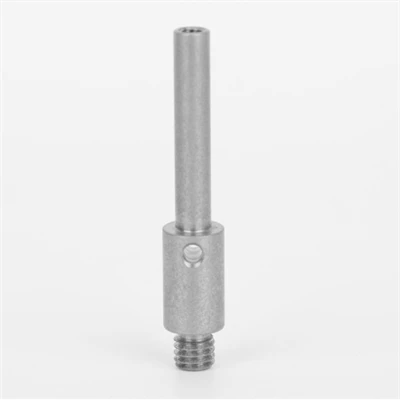
![Special & Stepped Shafts]() Special & Stepped ShaftsAotian special-shaped stepped shafts are processed from high-quality cold heading fine wire, widely used in...read more
Special & Stepped ShaftsAotian special-shaped stepped shafts are processed from high-quality cold heading fine wire, widely used in...read more -
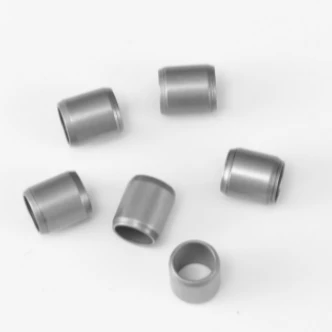
![Sleeves & Bushings]() Sleeves & BushingsAotian sleeve bushings are made of cold heading fine wire for automotive, motorcycle and other applications.read more
Sleeves & BushingsAotian sleeve bushings are made of cold heading fine wire for automotive, motorcycle and other applications.read more -
![SAE1008 For Screws And Rivets]() SAE1008 For Screws And RivetsCold-drawn low-carbon steel wire is made from ordinary carbon steel hot-rolled coils with a diameter of 6.5 or 8 mm,...read more
SAE1008 For Screws And RivetsCold-drawn low-carbon steel wire is made from ordinary carbon steel hot-rolled coils with a diameter of 6.5 or 8 mm,...read more -
![Cold Drawn Wire CH1T]() Cold Drawn Wire CH1TCH1T is a kind of alloy structural steel, which has suitable hardenability, and after suitable metal heat treatment,...read more
Cold Drawn Wire CH1TCH1T is a kind of alloy structural steel, which has suitable hardenability, and after suitable metal heat treatment,...read more

Send Inquiry