
What should you pay attention to when using fuses:
In view of the excellent short-circuit protection performance of fuses, they are widely used in high and low-voltage power distribution systems and control systems as well as electrical equipment. As short-circuit and over-current protectors, they are one of the most commonly used and important protection devices.
In application, attention should be paid to the precautions for the use of fuses, daily inspections and maintenance.
Things to note when using fuses:
1. The protective characteristics of the fuse should be compatible with the overload characteristics of the protected object. Taking into account the possible short-circuit current, select a fuse with corresponding breaking capacity;
2. The rated voltage of the fuse must adapt to the line voltage level, and the rated current of the fuse must be greater than or equal to the rated current of the melt;
3. The rated current of the melt of each level of fuses in the line must be matched accordingly, and the rated current of the previous level must be greater than the rated current of the next level;
4. The melt of the fuse must be matched to the requirements. It is not allowed to increase the melt or replace the melt with other conductors.
Fuse inspection:
1. Check whether the ratings of the fuse and melt match the equipment being protected;
2. Check whether the appearance of the fuse is damaged or deformed, and whether there are traces of flash discharge on the porcelain insulation part;
3. Check whether the contact points of the fuse are intact, tightly contacted, and whether there is overheating;
4. Check whether the blown signal indicator of the fuse is normal.
Fuse use and maintenance:
1. When the melt melts, the cause of the melt must be carefully analyzed. Possible reasons include:
1) Normal fuse due to short circuit fault or overload operation;
2) The melt has been used for too long, and the melt characteristics have changed due to oxidation or high temperature during operation, leading to accidental interruption;
3) There is mechanical damage during the installation of the melt, which reduces the cross-sectional area and causes false disconnection during operation.
2. When replacing the melt, it is required to:
1) Before installing a new melt, find out the cause of the melt melt. If the cause of the melt is not determined, do not replace the melt for trial delivery;
2) When replacing a new melt, check whether the rating of the melt matches the equipment being protected;
3) When replacing new melt, check the internal burns of the fuse tube. If there are serious burns, replace the fuse tube at the same time. When the porcelain fused pipe is damaged, it is not allowed to replace it with pipes made of other materials. When replacing the melt of a packed fuse, pay attention to the filling.
3. The fuses should be repaired at the same time as the power distribution device:
1) Clean the dust and check the contact condition of the contact points;
2) Check the appearance of the fuse (remove the fuse tube) for damage and deformation, and check whether the porcelain parts have any traces of discharge flash;
3) Check whether the fuse and melt match the circuit or equipment being protected. If there are any problems, investigate them in time;
4) Pay attention to check the N line in the TN grounding system and the ground protection line of the equipment. The use of fuses is not allowed;
5) When maintaining and inspecting the fuse, the power supply must be cut off according to safety regulations. It is not allowed to remove the fuse tube while the power is on.
What should we pay attention to when using fuses?
Popular Products
-
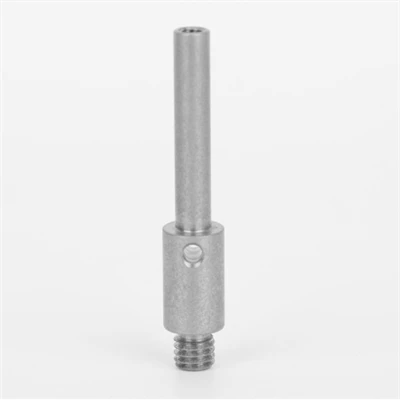
![Special & Stepped Shafts]() Special & Stepped ShaftsAotian special-shaped stepped shafts are processed from high-quality cold heading fine wire, widely used in...read more
Special & Stepped ShaftsAotian special-shaped stepped shafts are processed from high-quality cold heading fine wire, widely used in...read more -
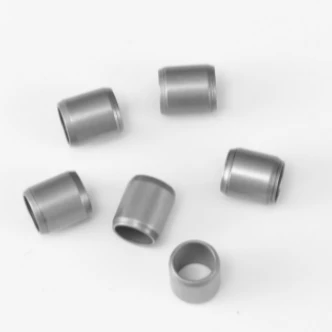
![Sleeves & Bushings]() Sleeves & BushingsAotian sleeve bushings are made of cold heading fine wire for automotive, motorcycle and other applications.read more
Sleeves & BushingsAotian sleeve bushings are made of cold heading fine wire for automotive, motorcycle and other applications.read more -
![SAE1008 For Screws And Rivets]() SAE1008 For Screws And RivetsCold-drawn low-carbon steel wire is made from ordinary carbon steel hot-rolled coils with a diameter of 6.5 or 8 mm,...read more
SAE1008 For Screws And RivetsCold-drawn low-carbon steel wire is made from ordinary carbon steel hot-rolled coils with a diameter of 6.5 or 8 mm,...read more -
![Cold Drawn Wire CH1T]() Cold Drawn Wire CH1TCH1T is a kind of alloy structural steel, which has suitable hardenability, and after suitable metal heat treatment,...read more
Cold Drawn Wire CH1TCH1T is a kind of alloy structural steel, which has suitable hardenability, and after suitable metal heat treatment,...read more

Send Inquiry