
Why can't the double seal valve be used as a shut-off valve?
The advantage of the double-seat valve core is the force-balanced structure, which allows a large pressure difference. However, its outstanding disadvantage is that the two sealing surfaces cannot make good contact at the same time, causing large leakage. If it is used artificially and compulsorily in cutting-off situations, the effect will obviously not be good. Even if many improvements are made to it (such as double sealing sleeve valve), it is not advisable.
Why is the control valve easy to oscillate when the double-seat valve is working at a small opening?
For a single core, when the medium is flow-open type, the valve stability is good; when the medium is flow-closed type, the valve stability is poor. The double-seat valve has two valve cores. The lower valve core is in flow-closed state and the upper valve core is in flow-open state. In this way, when working at a small opening, the closed-flow valve core can easily cause vibration of the valve. This is a double-seat valve. The reason why it cannot be used for small opening work.
Which straight-stroke control valve has poor anti-blocking performance and quarter-turn valve has good anti-blocking performance?
The valve core of the straight stroke valve is a vertical throttle, while the medium flows in and out horizontally. The flow path in the valve cavity must turn back and forth, making the flow path of the valve quite complicated (the shape is like an inverted S-shape). In this way, there are many dead zones, which provide space for the precipitation of the medium, which in the long run will cause blockage. The throttling direction of the quarter-turn valve is the horizontal direction. The medium flows in and out horizontally, which can easily take away the dirty medium. At the same time, the flow path is simple and there is little space for the medium to settle, so the quarter-turn valve has good anti-blocking performance.
Why is the cut-off pressure difference of quarter-turn valves larger?
The cut-off pressure difference of the quarter-turn valve is large because the resultant force generated by the medium on the valve core or valve plate exerts a very small torque on the rotating shaft. Therefore, it can withstand a large pressure difference.
Why is the valve stem of a straight stroke regulating valve thinner?
It involves a simple mechanical principle: sliding friction is large and rolling friction is small. The valve stem of the straight stroke valve moves up and down. If the packing is pressed a little tighter, it will wrap the valve stem very tightly, resulting in a large hysteresis. To this end, the valve stem is designed to be very small, and the packing often uses PTFE packing with a small friction coefficient in order to reduce the hysteresis. However, the problem derived from this is that a thin valve stem is easy to bend and the packing life is short. The best way to solve this problem is to use a rotary valve stem, that is, a quarter-turn control valve. Its valve stem is 2 to 3 times thicker than a straight-stroke valve stem, and it uses graphite filler with long life and high valve stem stiffness. Ok, the packing has long life, what is a hard seal?
The lower the leakage required for shut-off valves, the better. The leakage of soft-sealing valves is the lowest. Of course, the shut-off effect is good, but it is not wear-resistant and has poor reliability. From the dual standards of small leakage and reliable sealing, soft seal cutting is not as good as hard seal cutting. For example, the full-function ultra-light control valve is sealed and protected by wear-resistant alloy. It has high reliability and a leakage rate of 10~7, which can already meet the requirements of a shut-off valve.
What are the common problems with valves?
Popular Products
-
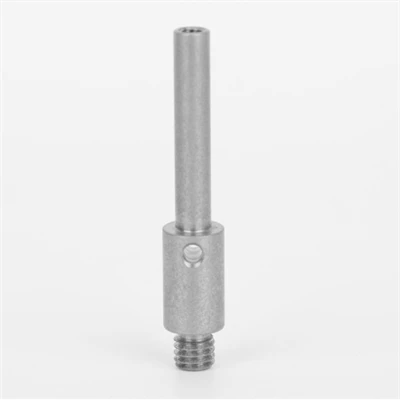
![Special & Stepped Shafts]() Special & Stepped ShaftsAotian special-shaped stepped shafts are processed from high-quality cold heading fine wire, widely used in...read more
Special & Stepped ShaftsAotian special-shaped stepped shafts are processed from high-quality cold heading fine wire, widely used in...read more -
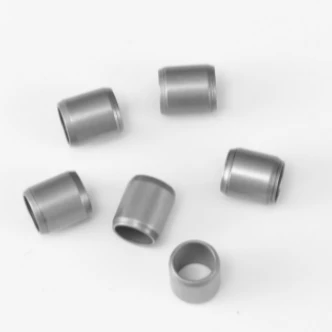
![Sleeves & Bushings]() Sleeves & BushingsAotian sleeve bushings are made of cold heading fine wire for automotive, motorcycle and other applications.read more
Sleeves & BushingsAotian sleeve bushings are made of cold heading fine wire for automotive, motorcycle and other applications.read more -
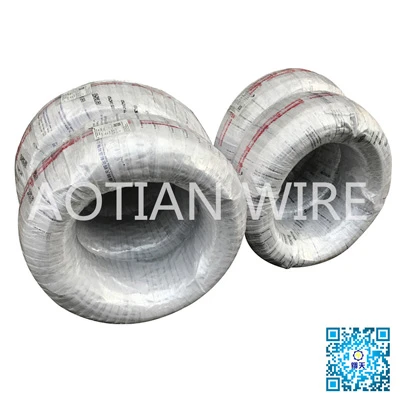
![SAE1008 For Screws And Rivets]() SAE1008 For Screws And RivetsCold-drawn low-carbon steel wire is made from ordinary carbon steel hot-rolled coils with a diameter of 6.5 or 8 mm,...read more
SAE1008 For Screws And RivetsCold-drawn low-carbon steel wire is made from ordinary carbon steel hot-rolled coils with a diameter of 6.5 or 8 mm,...read more -
![Cold Drawn Wire CH1T]() Cold Drawn Wire CH1TCH1T is a kind of alloy structural steel, which has suitable hardenability, and after suitable metal heat treatment,...read more
Cold Drawn Wire CH1TCH1T is a kind of alloy structural steel, which has suitable hardenability, and after suitable metal heat treatment,...read more

Send Inquiry