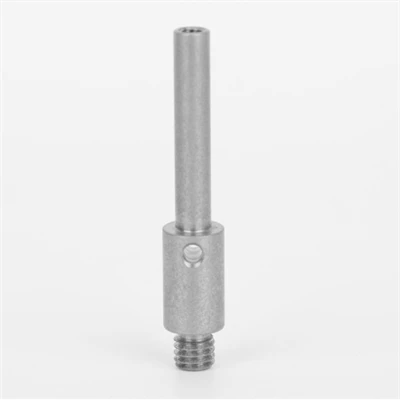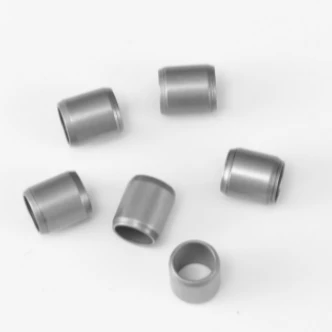

Riveted nut is a common functional nut, it does not have a unified national standard, but there are many different specifications. Riveted nuts, also known as self-fastening nuts, are mainly used in the connection of sheet or sheet metal materials. Friends who have decompressed riveted nuts may say that the use of riveted nuts is similar to that of welded nuts, what is the difference between the two? Pressure riveting nut is also called riveting nut, self-fastening nut, shape is round, one end with embossing teeth and guide groove. The principle is to press into the preset hole position of the sheet metal through the embossed teeth, generally speaking, the aperture of the preset hole is slightly less than the embossed teeth of the riveted nut, and the pressure makes the embossed teeth of the riveted nut squeeze into the plate, resulting in plastic deformation around the hole, and the deformation is squeezed into the guide slot, resulting in the locking effect. The purpose of welding and riveting nuts is to make two objects tight and connected together, so what is the difference between these two methods?
Welding is equivalent to turning two separate parts into a whole, melting the metal at high temperature after mixing it together and then cooling it, the alloy will be added in the middle, and the internal is the effect of molecular force, the strength is generally greater than the maternal strength. Rivet nuts are generally used in sheet metal or sheet metal, is embedded by pressure, the shape is circular, one end with embossed-tooth and guide groove, the contact surface is contact stress, that is, the strength depends on the connector and the parent, the nut is subjected to shear stress, so if the strength of the nut is not enough shear damage, and the parent strength is not enough plastic crushing deformation failure.
These two have advantages and disadvantages, such as welding, the strength is relatively large, thin and thick can be used, but due to high temperature will lead to deformation of the connected parts, and it is not removable, and some active metals can not be welded with the usual methods, such as aluminum, magnesium, etc., need to protect gas or argon arc welding, requiring processing technology and accuracy. The pressure riveting nut is simple to install, can be disassembled, easy to install and transport, etc., convenient equipment, just simple pressure riveting, almost suitable for any perforable metal, but the use range is narrow, can only be used for thin-wall panel, sheet metal, electronic or precision equipment connection. The purpose of the riveted nut is similar to that of the welded nut, which is to firmly connect the two objects together. However, the welding nut is a relatively strong nut that can deal with a variety of materials of different thicknesses, and its high temperature operation will cause the object to deform and can no longer be disassembled. The strength of the riveted nut is not so high, which is characterized by disassembly and simple operation.