

Pressure riveting nuts are common functional nuts. There is no unified national standard, but there are many different specifications. Pressure rivet nuts are also called self-fastening nuts and are mainly used for the connection of thin plates or sheet metal materials. Friends who know about pressure rivet nuts may say that the uses of pressure rivet nuts are similar to those of welding nuts. So what is the difference between the two?
Pressure rivet nut, also called rivet nut, is a self-fastening nut with a round shape and embossed teeth and guide grooves on one end. The principle is to press into the preset hole position of the sheet metal through embossed teeth. Generally speaking, the aperture of the preset hole is slightly smaller than the embossed teeth of the rivet nut. The teeth of the rivet nut are squeezed into the plate through pressure, causing the Plastic deformation occurs around the hole, and the deformed object is squeezed into the guide groove, thereby producing a locking effect.
The purpose of welding and riveting nuts is to fasten and connect two objects together, so what are the differences between the two methods?
Welding is equivalent to turning two separate parts into a whole. The metal is melted at high temperature, mixed together and then cooled. An alloy is added in the middle. The internal force is the effect of molecular forces, and the strength is generally stronger than the parent body.
Pressure rivet nuts are generally used on thin plates or sheet metal. They are embedded through pressure. They are round in shape, with embossed teeth and guide grooves on one end. The contact surface is subject to contact stress, which means that the strength depends on the connector and the mother body. , the nut is subjected to shear stress, so if the strength of the nut is not enough, it will be sheared and damaged, and if the strength of the mother body is not enough, it will fail by plastic crushing deformation.
Both of these have their own advantages and disadvantages, such as welding, which is relatively strong, can be used in both thickness and thickness, and has a wide range of uses. However, high temperatures will cause the connected parts to deform and cannot be disassembled, and some active metals cannot be welded by normal methods, such as aluminum. Magnesium, etc., require shielding gas or argon arc welding, requiring processing technology and precision. The rivet nut is simple to install and can be disassembled, making it easy to install and transport. It is easy to equip and requires only simple riveting. It is suitable for almost any metal that can be drilled. However, the range of use is narrow and can only be used for thin-walled boards, sheet metal, etc. Electronic or precision equipment connections.
The purpose of rivet nuts is similar to that of welding nuts, both of which are to firmly connect two objects together. However, the welding nut is a relatively strong nut that can handle materials of various thicknesses. Its high-temperature operation will cause the object to deform and cannot be disassembled. The strength of the rivet nut is not that high. Its characteristic is that it can be disassembled and easy to operate.
The use of rivet nuts and the difference from welding nuts
Popular Products
-
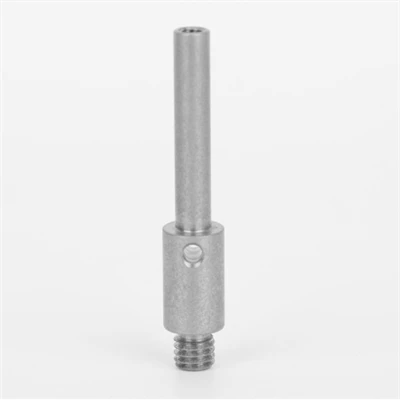
![Special & Stepped Shafts]() Special & Stepped ShaftsAotian special-shaped stepped shafts are processed from high-quality cold heading fine wire, widely used in...read more
Special & Stepped ShaftsAotian special-shaped stepped shafts are processed from high-quality cold heading fine wire, widely used in...read more -
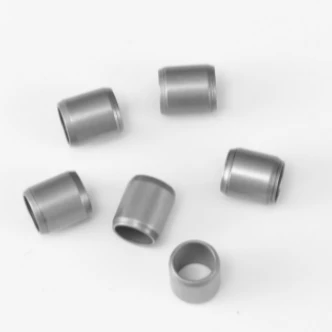
![Sleeves & Bushings]() Sleeves & BushingsAotian sleeve bushings are made of cold heading fine wire for automotive, motorcycle and other applications.read more
Sleeves & BushingsAotian sleeve bushings are made of cold heading fine wire for automotive, motorcycle and other applications.read more -
![SAE1008 For Screws And Rivets]() SAE1008 For Screws And RivetsCold-drawn low-carbon steel wire is made from ordinary carbon steel hot-rolled coils with a diameter of 6.5 or 8 mm,...read more
SAE1008 For Screws And RivetsCold-drawn low-carbon steel wire is made from ordinary carbon steel hot-rolled coils with a diameter of 6.5 or 8 mm,...read more -
![Cold Drawn Wire CH1T]() Cold Drawn Wire CH1TCH1T is a kind of alloy structural steel, which has suitable hardenability, and after suitable metal heat treatment,...read more
Cold Drawn Wire CH1TCH1T is a kind of alloy structural steel, which has suitable hardenability, and after suitable metal heat treatment,...read more

Send Inquiry