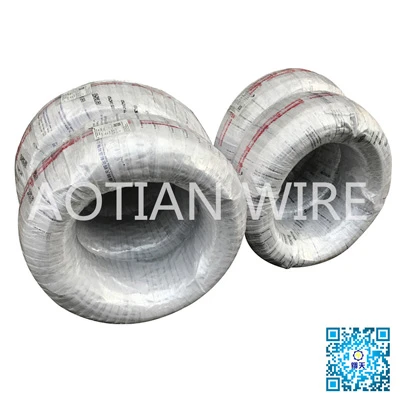

Cold drawn wire is often used in our lives, especially in construction. Do we have a simple understanding of cold drawn wire? There are many kinds of cold drawn specifications, and the prices are also different. According to the characteristics of cold drawing, we have some common basic characteristics of cold drawing and some problems that should be paid attention to in use.
Cold drawing is a type of metal cold working. We usually call it the raw material of steel bars. A series of products are produced during the dehulling process. This is our common wire. Ordinary steel bar, let it pass through a small hole whose diameter is larger than that of forcibly pulled through, and the rod diameter becomes smaller and longer. If this process is repeated, the round steel will become smaller. After plastic deformation, the hardness of the steel will increase and the plasticity will disappear.
We can reduce the diameter of the original steel wire to a very small diameter through wire drawing, and repeat the wire drawing to achieve a very small wire diameter. What about hot wire drawing for cold wire drawing? It can be said that the drawing process that controls the heating of the steel to a certain degree to reach the crystallization temperature is called hot drawing. Stretching at room temperature is called cold stretching.
Hot-drawing has strong plasticity, easy forming, no internal stress, and convenient processing procedures. The characteristics of cold drawn steel wire for cold work hardening.
Cold working includes cold rolling and cold drawing, and cold working is production work hardening. Work hardening means that as the plastic deformation increases, the strength and hardness of the metal also increase, while the plasticity and toughness decrease.
Cold working and hot working are mainly divided into crystallization temperature. Pressure treatment below the recrystallization temperature is a cold working process, resulting in work hardening, otherwise work hardening will be eliminated by recrystallization.
Cold-rolled and cold-drawn steel wires produce plastic deformation and diameter reduction, but the diameter reduction occurs during the cold rolling process. The purpose of cold drawing is to reduce, but it is also drawn to the target diameter multiple times. Therefore, their performance is also very different.