
The main differences between hollow rivets and solid rivets are their structural design, usage scenarios and installation methods. The following is a comparison of the two types of rivets.
Solid Rivet
Structure: Solid rivets, as the name suggests, are solid in nature. They are usually made from a solid metal bar and may have smooth ends or a head.
Use: Solid rivets are used in applications that are subjected to higher loads or stresses because they provide greater joint strength and stability. Solid rivets are commonly used in the coupling of heavy workpieces, such as heavy machinery and equipment, and building structures.
Installation: To install solid rivets, the rivet is driven through pre-drilled holes in two or more parts and then hammered or extended with a riveting tool at one end to form a "rivet cap" that secures the part.
Hollow Rivet
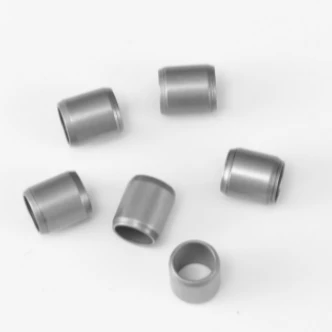
Structure: Hollow rivets have a hollow body, they usually consist of a tubular structure that may be closed at one end and open at the other.
Use: Hollow rivets are suitable for joining thin sheet materials, as they are installed without large stress concentrations as solid rivets. They are widely used in light industrial, apparel, and footwear industries, as well as applications that require aesthetically pleasing and lightweight connections.
Installation: To install hollow rivets, they are inserted into pre-drilled holes and then a specialized tool (such as a rivet gun) is used to squeeze the hollow portion to deform and secure the part.
Solid Rivet: Usually has one end that is flat or has a head, and the other end forms a flat rivet cap after installation.
Hollow Rivet: Similar in appearance to a small tube, one end may be closed and the other end will be flattened or expanded during installation to form a fixing.