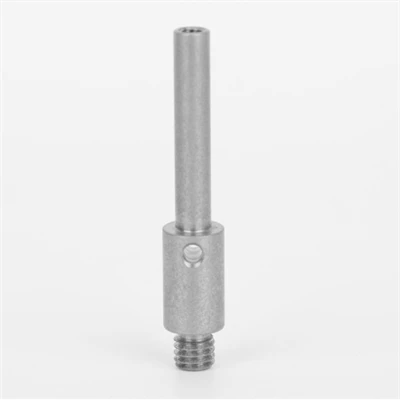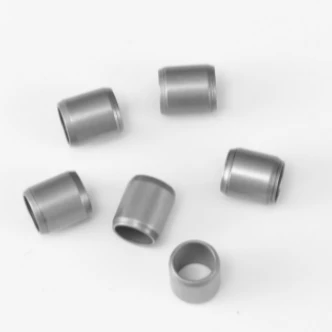

It has high static strength, impact toughness and high fatigue limit, higher hardenability than 40Cr, high creep strength and lasting strength at high temperature, long-term working temperature up to 500℃; Medium plasticity and poor weldability during cold deformation. Used as important structural components working under high loads, such as transmission parts of vehicles and engines; Turbine generator rotor, main shaft, heavy load transmission shaft, large section parts.
Physical properties
Chemical component:
Carbon C: 0.33 ~ 0.38
Si: 0.15 ~ 0.35
Manganese Mn: 0.60 ~ 0.90
Sulfur S: Allowable residual content ≤0.030
Phosphorus P: allowable residual content ≤0.030
Chromium Cr: 0.90 ~ 1.20
Nickel Ni: allowable residual content ≤0.25
Copper Cu: Allowable residual content ≤0.30
Mo: 0.15 ~ 0.30
Mechanical property:
Tensile strength σb (MPa) : ≥985(100)
Yield strength σs (MPa) : ≥835(85)
elongation δ5 (%) : ≥12
section shrinkage ψ (%) : ≥45
Impact work Akv (J) : ≥63
impact toughness value αkv (J/cm²) : ≥78(8)
Hardness: ≤229HB
Heat treatment regime:
Quenching 850℃, oil cold; Tempering 550℃, water cooling, oil cooling.
The chemical composition, mechanical properties and heat treatment requirements of SCM435 steel shall refer to JIS G4053-2003 standard or the technical data provided by the manufacturer. When using SCM435 steel, it should be selected and treated according to the specific application requirements and process requirements to ensure that it meets the required performance and quality requirements. SCM435 steel is widely used in many mechanical and manufacturing fields because it has good mechanical properties and corrosion resistance. The chemical composition and mechanical properties of this steel allow it to maintain sufficient strength and stability at high temperatures, so it is often used in the manufacture of high-temperature equipment and components.
In order to realize the full potential of SCM435 steel, proper heat treatment is required. According to JIS G4053-2003 standard or the technical data provided by the manufacturer, the heat treatment process consists of holding the heat for a certain time within a certain temperature range, and then cooling to room temperature at an appropriate rate. This process can improve the mechanical properties and corrosion resistance of steel, making it more suitable for specific application scenarios.