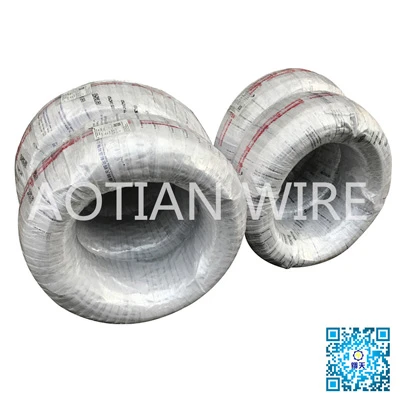

Wire rods and straight rods with a diameter of 5-9mm (also hot-rolled by rolling mills). Wires of all kinds (cold drawn by wire drawing machines) are excluded regardless of diameter. The wire rod is section steel according to its cross-sectional shape and has actually become an independent steel type. Hot-rolled round steel with a diameter of 5-9mm and rebar with a diameter of less than 10mm are commonly known as wire rods. Wire rods are mostly supplied in coils by coiling machines, so they are also called wire rods or coils. Wire rod is one of the most widely used steel varieties. After rolling, it can be directly used for reinforcement and welded structural parts of reinforced concrete, and can also be used after reprocessing.
For example, it is drawn into various specifications of steel wire, then twisted into steel wire rope, woven into steel wire mesh, wound into shape, and heat-treated into spring; through hot and cold forging into rivets and cold-forged and rolled into bolts, screws, etc.; Cutting into heat treatment to make mechanical parts or tools, etc. Wire rods are generally made of ordinary carbon steel and high-quality carbon steel. According to different steel distribution catalogs and uses, wire rods include ordinary low-carbon steel hot-rolled round wire rods, high-quality carbon steel wire rods, carbon welding rod wire rods, and quenched and tempered threaded wire rods, wire rods for wire ropes, and wire rods for piano wires. And stainless steel wire rods, etc.
The finished wire is pulled and rusted overnight. Whether it has anything to do with the time of soaking in hydrochloric acid and the time of washing the acid, and whether it is related to the washing of the acid with well water.
First, make sure that it is cleaned, and then ensure that the wire is free of residual acid after washing, and it needs to be dried, and the warehouse should be kept away from the pickling workshop. Anti-rust oil can be applied when appropriate.