

An expansion bolt is a type of fastener consisting of a head and a screw (a cylinder with an external thread). It needs to be matched with a nut and is used to fasten two parts with through holes. This type of connection is called Bolt connection, if the nut is unscrewed from the bolt, the two parts can be separated, so the bolt connection is a detachable connection. Next, the editor of Xianji.com will introduce to you the usage of expansion bolts, fixing principles, installation steps, usage precautions, different classifications, burial depths, strength tests, purchase methods, and the mixed use of curtain wall chemical anchors and expansion bolts. question.
Expansion bolt usage
1. When using, you must first use an impact electric drill (hammer) to drill holes of corresponding sizes on the fixed body, then install the bolts and expansion tubes into the holes, and tighten the nuts to make the bolts, expansion tubes, installation parts and fixed parts The bodies become tight and become one;
2. It will expand after tightening. There is a big head at the end of the bolt. There is a round pipe slightly larger than the diameter of the bolt on the outside of the bolt. There are several openings in the tail part;
3. After the bolt is tightened, the tail end of the big head is brought into the open pipe, and the pipe is enlarged to achieve the purpose of expansion, and then the bolt is fixed on the ground or wall to achieve the purpose of rooting.
Fixing principle of expansion bolts
The fixation of expansion bolts uses a curved inclination to promote expansion and produce frictional gripping force to achieve a fixing effect. One end of the screw is threaded, one end has a cone, and the outside is covered with an iron sheet. Half of the iron sheet cylinder has several cuts. Thicken them together. Enter the hole drilled in the wall, and then lock the nut. The nut pulls the screw outward and pulls the vertebra into the iron cylinder. The iron cylinder is expanded and then tightly fixed to the wall. It is generally used for guardrails and rainwater. Fastening of tents, air conditioners, etc. on cement, bricks and other materials. However, its fixation is not very reliable. If the load vibrates greatly, it may become loose, so it is not recommended for installing ceiling fans, etc.
Installation steps of expansion bolts
1. Choose an alloy drill bit that matches the outer diameter of the inner expansion bolt, and then drill according to the length of the inner expansion bolt. Drill the hole to the depth required for your installation, and then clean the hole;
2. Install the flat washer, spring washer and nut, screw the nut to the bolt and end to protect the thread, and then insert the inner expansion bolt into the hole;
3. Turn the wrench until the washer and the surface of the fixture are flush. If there are no special requirements, generally tighten by hand and then use the wrench for three to five turns.
Precautions for using expansion bolts
1. Drilling depth: In specific construction, it is best to make the depth about 5 mm deeper than the length of the expansion pipe. As long as it is greater than or equal to the length of the expansion pipe, the length of the internal expansion bolt left underground is equal to or less than the length of the expansion pipe. ;
2. The requirement for internal expansion bolts on the ground is of course that the harder the better, this also depends on the stress of the object you need to fix. The stress strength of the internal expansion bolts installed in concrete (C13-15) is five times that of the brick body. times;
3. After an M6/8/10/12 internal expansion bolt is correctly installed in concrete, its optimal maximum static force is 120/170/320/510 kg respectively. The installation method of the internal expansion bolt is not the same. It is not very difficult. The specific operation is as follows; first, select an alloy drill bit with the same diameter as the expansion screw expansion ring (tube), install it on the electric drill, and then drill the wall. The depth of the hole should be the same as the length of the bolt, and then Lower the expansion screw kit into the hole together. Remember: do not unscrew the screw to prevent the bolt from falling into the hole when the hole is drilled deeper and making it difficult to remove it. Then tighten the screw 2-3 buckles and feel the expansion bolt. Once it is tight but not loose, unscrew the screw.
Different classifications of expansion bolts
1. The grades of carbon steel bolts are divided into more than 10 grades such as 3.6, 4.6, 4.8, 5.6, 6.8, 8.8, 9.8, 10.9, and 12.9. The numbers before and after the decimal point represent the nominal tensile strength and yield ratio of the bolt material respectively. For example: bolts marked with grade 8.8 indicate that the tensile strength of the material reaches 800MPa, and the yield strength ratio is 0.8, which means that the yield strength reaches 800x0.8=640MPa;
2. The grades of stainless steel bolts are divided into 45, 50, 60, 70, and 80. The materials are mainly divided into austenite A1, A2, and A4, martensite and ferrite C1, C2, and C4. Their representation methods are such as A2-70. , "--" before and after respectively indicates the bolt material and strength grade.
Buried depth of expansion bolts
1. Based on 4 times the bolt diameter, the deeper the bolt is buried, the greater the tensile and shear forces it can withstand. Factors that manufacturers need to consider when designing include issues such as material and anchoring;
2. The reference basis for the use of expansion bolts: the strength of concrete; the strength of fixing screws (calculated according to material).
Strength test of expansion bolts
In the past, hydraulic pressure was used to pressurize, and the maximum force required to pull out the expansion bolt was its tensile strength. The disadvantage of this testing method is that it cannot detect the displacement of the screw leaving the cement, that is, it is impossible to know the expansion of the material itself. The elastic stress is within a few Newtons, so the new testing instrument plots the tension and displacement as a coordinate diagram. The Y-axis is the tension and the X-axis is the displacement. When the tension increases, the displacement increases until the cement breaks. Or the expansion bolt is pulled out or broken. The highest point of this curve is the ultimate tensile strength. In addition, when the tensile force rises to a certain point, if the tensile force is removed, the displacement can still return to the original position. This is the expansion bolt itself. The yield point of the material is exactly the proportional load we want in the design.
How to purchase expansion bolts
1. It is very important to look at the thickness of the expansion bolt expansion tube. The thickness of the tube determines whether the anchoring force is strong and whether it is easy to pull out. Be careful when purchasing. If you can pinch the expansion bolt with your hands, do not buy it. ! Definitely non-standard! When purchasing, be sure to purchase expansion screws with thick tubes that cannot be pinched by hand. Such expansion bolts will greatly increase the anchoring force in the wall;
2. It depends on the matching degree of the screw thread and the nut thread. The matching degree of the non-standard expansion bolt is poor. The bolt and nut are loose and feel like they are about to fall off. Such products are easy to scratch when tightening, which will cause secondary rework and losses. Time money. When purchasing, be sure to buy expansion bolts that have a high degree of fit between bolts and nuts and are not loose. They will not cause scratches during installation, and safety and quality are guaranteed;
3. Look at the weight. Why should we look at the weight? Because some non-standard expansion bolts look very heavy. In fact, there is a large gap between the screw and the expansion tube. The rod is thin and the tube is thick. The national standard expansion bolt is compared with the non-standard expansion bolt. Expansion bolts may weigh twice as much as the latter. Like faucets, the heavier the better, only the heavier the material is.
The problem of mixing chemical anchors and expansion bolts in curtain walls
1. For ordinary curtain walls, the anchor bolts do not fully play their role when calculating embedded parts. They are set diagonally for two reasons: first, some cities explicitly require that the use of expansion screws is not allowed for tension. , in the process of explanation and calculation of this arrangement, only two chemical bolts are calculated and designed, and the tensile strength of the expansion bolt is not taken into account, thereby reducing the project cost; secondly, this design can ensure that the chemical bolts are heated when welded. Structural safety after loss is calculated. In fact, the tensile strength design value of expansion bolts is not lower than C30. Each manufacturer has also provided corresponding test reports and tensile design values. We do this for the safety and economy of structural connections. The starting point is to pay equal attention to both aspects.
2. As for the selection of chemical bolts, the friends above have said it in detail. Now Hilti and Fischer can provide strength design value reports after welding heat loss. I personally recommend that bolt manufacturers cannot provide it if there are welding requirements. If reported, use back-cut expansion bolt connection. Of course, the price is a bit high in terms of economics;
3. In terms of structural safety, friends above have analyzed it in detail, K2=2, K1=1.4 (for the standard value of wind load), then K=2*1.4=2.8, the structural connection at this time Under the action of wind load, the probability that the structure reaches the damage strength is 1/1120. The standard value of wind load we used for calculation is 2% based on the probability of occurrence once in 50 years in the design reference period. In this way, the impact of our embedded parts connection on wind load The damage rate is very low. Of course, this is only a reference for everyone to quantitatively understand the probability. In fact, the selection process should also select the actual concrete strength of the bolts on the project as the friend above said. 2 times the ultimate damage in the test is used as a basis, and an on-site pull test is conducted as a verification (note that this is based on the overall embedded parts under the same weld length or within the welding time on site, or a single chemical bolt. It is best to choose the overall of);
4. During the calculation process, the design tension value of the expansion bolt corresponding to the on-site concrete strength and the chemical bolt after welding loss (or the on-site pulling tension value) provided by our manufacturer are used as the basis, and the smaller value of the two is selected. The design value is the tension force of a single bolt, and then the calculation is carried out based on the tension N, bending M and shear V suffered by the embedded part. Then the tensile force exerted by a single bolt is N1=N/4+M/d/2, where d is the distance between the center line of the bolt in the tension area and the center line of the embedded plate in the pressure area. For the overall embedded part, the tension and compression center line Calculate as follows: Assume that the size of the embedded parts is b The value can be calculated based on the size of your buried plate opening. Shear of a single bolt: N2=V/4, and then review as a whole: (N1^2+3*N2^2)^0.5 is less than the design value of the tensile strength of a single bolt.
Summary: Expansion bolt usage, fixing principle, installation steps, usage precautions, different classifications, burial depth, strength test, purchase method, and the problem of mixed use of chemical anchors and expansion bolts in curtain walls. How much potential risk does a seemingly ordinary expansion bolt have? If the expansion bolt is not properly selected, it will endanger public safety. If the expansion bolt is not properly selected, it may even endanger the lives of family members. The expansion screw does not meet the standard tension and shear force. It will cause serious public danger, so it is particularly important to choose a good quality expansion bolt.
Explanation of expansion bolt usage, fixing principles, installation steps, usage precautions, etc.
Popular Products
-
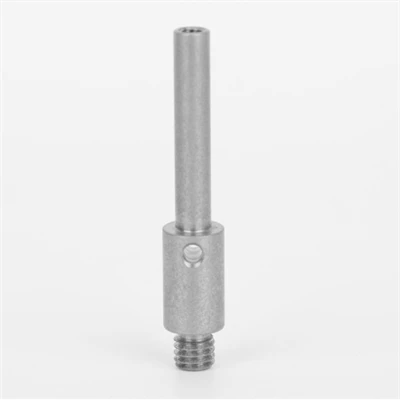
![Special & Stepped Shafts]() Special & Stepped ShaftsAotian special-shaped stepped shafts are processed from high-quality cold heading fine wire, widely used in...read more
Special & Stepped ShaftsAotian special-shaped stepped shafts are processed from high-quality cold heading fine wire, widely used in...read more -
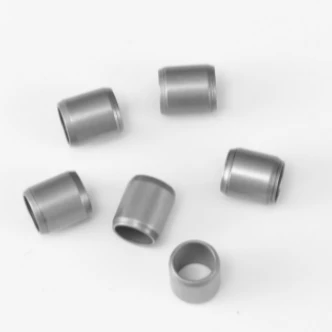
![Sleeves & Bushings]() Sleeves & BushingsAotian sleeve bushings are made of cold heading fine wire for automotive, motorcycle and other applications.read more
Sleeves & BushingsAotian sleeve bushings are made of cold heading fine wire for automotive, motorcycle and other applications.read more -
![SAE1008 For Screws And Rivets]() SAE1008 For Screws And RivetsCold-drawn low-carbon steel wire is made from ordinary carbon steel hot-rolled coils with a diameter of 6.5 or 8 mm,...read more
SAE1008 For Screws And RivetsCold-drawn low-carbon steel wire is made from ordinary carbon steel hot-rolled coils with a diameter of 6.5 or 8 mm,...read more -
![Cold Drawn Wire CH1T]() Cold Drawn Wire CH1TCH1T is a kind of alloy structural steel, which has suitable hardenability, and after suitable metal heat treatment,...read more
Cold Drawn Wire CH1TCH1T is a kind of alloy structural steel, which has suitable hardenability, and after suitable metal heat treatment,...read more

Send Inquiry