

Bolts are one of the most basic components of engineering and construction, but their production has become an advanced, high-tech process with multiple steps. Learn how raw steel is transformed into highly precise and precise metal tools.
Bolts can come in a variety of sizes and shapes, but the basic production process usually remains the same. Cold forged steel wire is first formed into the correct shape, then heat treated for strength and surface treated for durability before being shipped. However, for more advanced bolt designs, the production process can be expanded with many additional steps.
Cold heading STARTS with large steel wire rods, which are uncoiled and cut to length. According to the requirements of ISO 898-1, steel grades are standardized throughout the industry. Using special tools, the wire is then cold-forged into the correct shape. This is basically where steel is molded, while at room temperature, by forcing it through a series of molds under high pressure. The tools themselves can be very complex, containing up to 200 different parts with tolerances of one hundredth of a millimeter. Once perfected, cold forging ensures fast, high-volume production of bolts with high uniformity.
For more complex bolt designs, where the profile cannot be formed by cold forging alone, some additional turning or drilling may be required. Turning involves turning the bolt at high speed while cutting the steel to obtain the desired shape and design. Drill holes can be used to drill holes in bolts. If desired, some bolts may also have washers attached at this stage of the process.
Heat treatment is a standard process for all bolts, which involves exposing the bolt to extreme temperatures in order to harden the steel. Threading is usually applied before heat treatment, by rolling or cutting, when the steel is softer. Rolling works in a similar way to cold forging and involves passing the bolt through a die to shape and mold the steel into threads. Cutting involves forming threads by cutting and removing steel.
Since heat treatment changes the properties of the steel to make it harder, it is easier and more cost-effective to pre-apply threads. However, threading after heat treatment means better fatigue performance.
"Heat treatment can cause heat marks and minor damage to bolts," therefore, some customers require threading after heat treatment, especially for applications such as engine and cylinder head bolts. This is a more expensive process because you need to form hardened steel, but the threads will hold their shape better.
For long bolts that are more than ten times the diameter of the bolt, heat treatment can return the steel to the rounded shape of the original wire. Therefore, a straightening process usually needs to be applied.
The choice of surface treatment depends on the bolt application and customer requirements. Often, the main issue with fasteners is corrosion resistance, so galvanized coatings applied by electrolytic processing are a common solution. This is a process in which bolts are immersed in a zinc-containing liquid and an electric current is applied to cause the zinc to form a coating on the bolts. However, electrolytic treatment does increase the risk of hydrogen embrittlement. Another option is zinc flake, which offers higher corrosion resistance, although it is more expensive.
When corrosion resistance is not an issue - such as inside engines or in applications with regular exposure to oil - using phosphates is a more cost-effective option. Once the surface treatment has been applied, standard bolts can usually be prepared. However, more advanced designs may require some additional assembly, such as brackets. Other bolts will also require some form of repair, whether it's a locking patch or a liquid patch. Locking patches consist of a thick layer of nylon on the threads to help improve grip. Liquid patch helps improve thread forming torque.
Once these steps are completed, the bolt is complete. All that remains now is some form of quality control to ensure consistency and consistency before the bolts can be packaged and shipped.
Bolt production process
production process
1. WIRE
Unroll, straighten and cut to length.
2.Cold forging
Form steel into the correct shape at room temperature.
3. Bolt head
It is gradually formed by forcing steel into various molds under high pressure.
4.Thread
Threads are formed by rolling or cutting.
5. Heat treatment Bolts are exposed to extreme heat to harden the steel.
6.Surface treatment
Depends on the application. Galvanizing often improves corrosion resistance.
7. Packaging/storage
After quality control to ensure uniformity and consistency, the bolts are packed.
Bolt production process Bolt production process
Popular Products
-
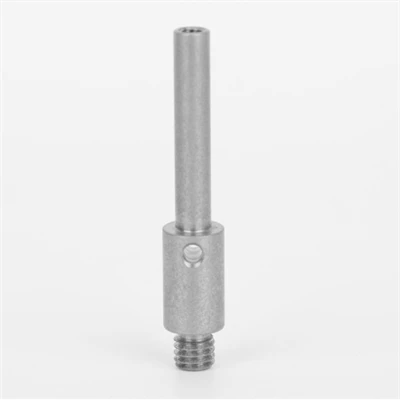
![Special & Stepped Shafts]() Special & Stepped ShaftsAotian special-shaped stepped shafts are processed from high-quality cold heading fine wire, widely used in...read more
Special & Stepped ShaftsAotian special-shaped stepped shafts are processed from high-quality cold heading fine wire, widely used in...read more -
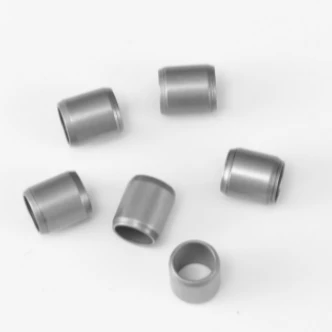
![Sleeves & Bushings]() Sleeves & BushingsAotian sleeve bushings are made of cold heading fine wire for automotive, motorcycle and other applications.read more
Sleeves & BushingsAotian sleeve bushings are made of cold heading fine wire for automotive, motorcycle and other applications.read more -
![SAE1008 For Screws And Rivets]() SAE1008 For Screws And RivetsCold-drawn low-carbon steel wire is made from ordinary carbon steel hot-rolled coils with a diameter of 6.5 or 8 mm,...read more
SAE1008 For Screws And RivetsCold-drawn low-carbon steel wire is made from ordinary carbon steel hot-rolled coils with a diameter of 6.5 or 8 mm,...read more -
![Cold Drawn Wire CH1T]() Cold Drawn Wire CH1TCH1T is a kind of alloy structural steel, which has suitable hardenability, and after suitable metal heat treatment,...read more
Cold Drawn Wire CH1TCH1T is a kind of alloy structural steel, which has suitable hardenability, and after suitable metal heat treatment,...read more

Send Inquiry