
Introduction and definition of cross arm insulators
Insulators used for overhead lines are called line insulators, and insulators used to support busbars or isolation switches in power stations are called power station pillar insulators. According to different uses, line insulators can be subdivided into several different types, including suspension insulators and tension insulators. According to the insulation materials used, insulators can be divided into three categories: electric porcelain, glass and composite insulators. According to the specific structure of the insulator, it can be divided into two categories: line insulators and power station insulators.
Insulators used for overhead lines are called line insulators. Insulators used to support busbars or isolation switches in power stations are called power station pillar insulators. The function of the bushing is to connect the live terminals inside the electrical equipment to the external system or to connect the live terminals indoors to the outdoor system. Porcelain-sheathed power station insulators function as containers and insulating sheaths for voltage transformers, current transformers or lightning arresters and other equipment. Another type of insulator is the cable end. It connects the cable to the overhead line.
Classification of cross arm insulators
Divided according to different uses
.Line insulators can be subdivided into several different types. Line insulators used to repair overhead conductors on towers are called suspension insulators. Insulators that need to withstand the tension of wires at the beginning and end of the line, at line turns and other parts are called tension insulators. Suspension insulators and tension insulators are both fixed on the tower arms connected to the tower columns. Their structures and shapes may be the same, the only difference is the suspension method and function. Suspension insulators are vertical suspension or V-shaped suspension. Tension insulators are suspended horizontally. The mechanical strength of tension insulators is required to be high, and multiple series and parallel connections are often used. In order to reduce line corridors in urban areas, cross-arm insulators are often used for overhead lines. Cross-arm insulators play the role of insulation and cross-arm at the same time.
Divided by insulation materials used
Insulators can be divided into three categories: electric porcelain, glass and composite insulators. Composite insulators are also called synthetic insulators. They are also called organic insulators or non-porcelain insulators. Electric porcelain and glass insulators are made of inorganic materials. Porcelain insulators have been used for more than 100 years. Glass insulators have been in use for more than 70 years. Composite insulators It has a short history. It was only in the 1970s that external insulation of power systems was successfully used. Semiconductor glaze insulator is a special form of electric porcelain insulator. It is coated with a layer of semiconductor sleeve on the surface of ordinary electric porcelain insulator. It is mainly used in dirty areas.
Divided according to the specific structure of the insulator
They can be divided into two categories: line insulators and power station insulators. Line insulators are divided into suspension insulators, pin insulators, cross arm insulators, etc. Suspension insulators are further divided into disc suspension insulators and rod suspension insulators. Power station insulators can be divided into pillar insulators, porcelain sleeves and bushings.
1. Suspension insulator
Suspension insulators are divided into two categories: disc suspension insulators and rod suspension insulators.
Disc suspension insulator is composed of iron phase (malleable cast iron), steel legs (mild steel) and porcelain parts (or tempered glass). Cement is used to glue the fittings and insulating parts together. The painted components of rod-shaped suspension insulators fall into two categories: electric porcelain and Xiamen 44. The advantage of rod-shaped suspension insulators is that they have a simple structure. The insulating parts are non-penetrable. , it is not necessary to detect zero values.
2. Pin insulator
Line pin insulators are mainly used for 6-10kV distribution lines. There is a wire slot on the top. The wires can be fixed in the wire slot. Pin insulators are also used for 20-35kV lines. But
Due to the high aging rate and large size, they have been gradually replaced by suspension insulators.
3. Cross arm insulator
The materials of cross arm insulators mainly fall into two categories: electric porcelain and composite materials. Electric porcelain cross arm insulators are rod-shaped porcelain parts. They are installed on poles to support conductors. They not only insulate the conductors from the ground, but also serve as a cross arm. When the voltage level is high, the mechanical impact of the cross arm insulator is High strength requirements.
4. Power station pillar insulators
Power station pillar insulators are used as insulation and mechanical fixed connections between conductors and grounding bodies. Such as pillar insulators of busbars or isolation switches, etc. It is composed of solid porcelain columns and upper and lower metal accessories through cement glue.
5. Porcelain sleeve
Containers used as insulation in electrical appliances, such as porcelain sleeves of current transformers, porcelain sleeves of circuit breakers, etc. The requirements for the outer insulation of porcelain sleeves are the same as those for the outer insulation of pillar insulators. Both have higher requirements for the structure of the umbrella W. They are required to have higher resistance to pollution flashover and rain flashover. Generally speaking, porcelain The outer shell of the sleeve is thicker. As the outer diameter increases, the insulator's resistance to pollution flashover and pollution flashover will decrease. Therefore, the electrical strength of the outer insulation of the porcelain sleeve is reduced.
6. Casing
The bushing is the lead insulation that leads the current-carrying wires into the metal box of electrical equipment such as transformers or circuit breakers or when the busbar passes through the wall. The bushing is a typical insulation structure in which the electric field has a strong vertical dielectric surface component. The voltage distribution on the surface is extremely uneven. The electric field at the edge of the middle flange is very concentrated, and it is easy for halo and flash discharge to start from here. The insulation material of bushings used to be electric porcelain materials. In recent years, bushings using composite materials have appeared. Since the silicone rubber material used as external insulation has strong resistance to pollution flashover, the use of composite bushings has increased significantly. quick. The development momentum is promising. There are higher requirements. Especially for the porcelain sleeve of the current transformer. Because its structural shape is thin at the top and thick at the bottom. The umbrella skirts are more likely to be bridged by rainwater. The rain flash resistance is low, so sufficient attention must be given to this problem. Past intention.
Cross arm insulator Baidu Encyclopedia
Popular Products
-
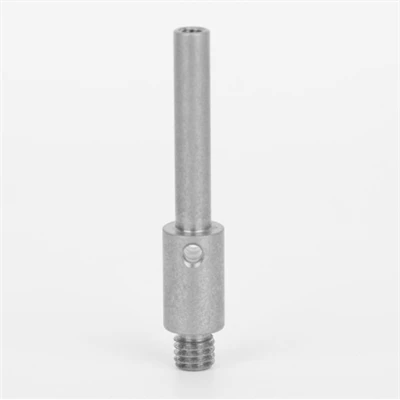
![Special & Stepped Shafts]() Special & Stepped ShaftsAotian special-shaped stepped shafts are processed from high-quality cold heading fine wire, widely used in...read more
-
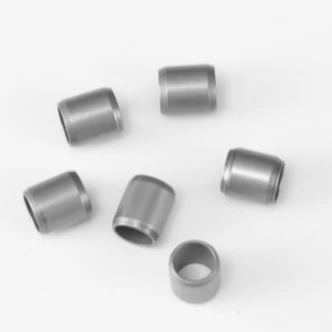
![Sleeves & Bushings]() Sleeves & BushingsAotian sleeve bushings are made of cold heading fine wire for automotive, motorcycle and other applications.read more
-
![SAE1008 For Screws And Rivets]() SAE1008 For Screws And RivetsCold-drawn low-carbon steel wire is made from ordinary carbon steel hot-rolled coils with a diameter of 6.5 or 8 mm,...read more
-
![Cold Drawn Wire CH1T]() Cold Drawn Wire CH1TCH1T is a kind of alloy structural steel, which has suitable hardenability, and after suitable metal heat treatment,...read more

Send Inquiry